
Solar News Stream of Conciousness
Residential VPP PPA
Residential finance company sees savings due to VPP
finance package for residential solar-plus-storage, claiming its enhanced terms are directly tied to the benefits derived from virtual power plants (VPP).
Solrite Energy’s PPA is now accessible to homeowners in California, Puerto Rico and Texas. The company is planning expansions into New York, New England and Hawaii later this year
For example, in Massachusetts and Rhode Island, the National Grid’s ConnectedSolutions program seeks to pay energy storage owners up to $400/kW during high grid demand events in Rhode Island, and $225 in Massachusetts. Similarly, Eversource, another major utility in Massachusetts, offers a similar program.
VPP revenue lowering solar pricing
100,000 solar-charged batteries are already installed at California homes and businesses, adding up to nearly 1.7 gigawatts of capacity.
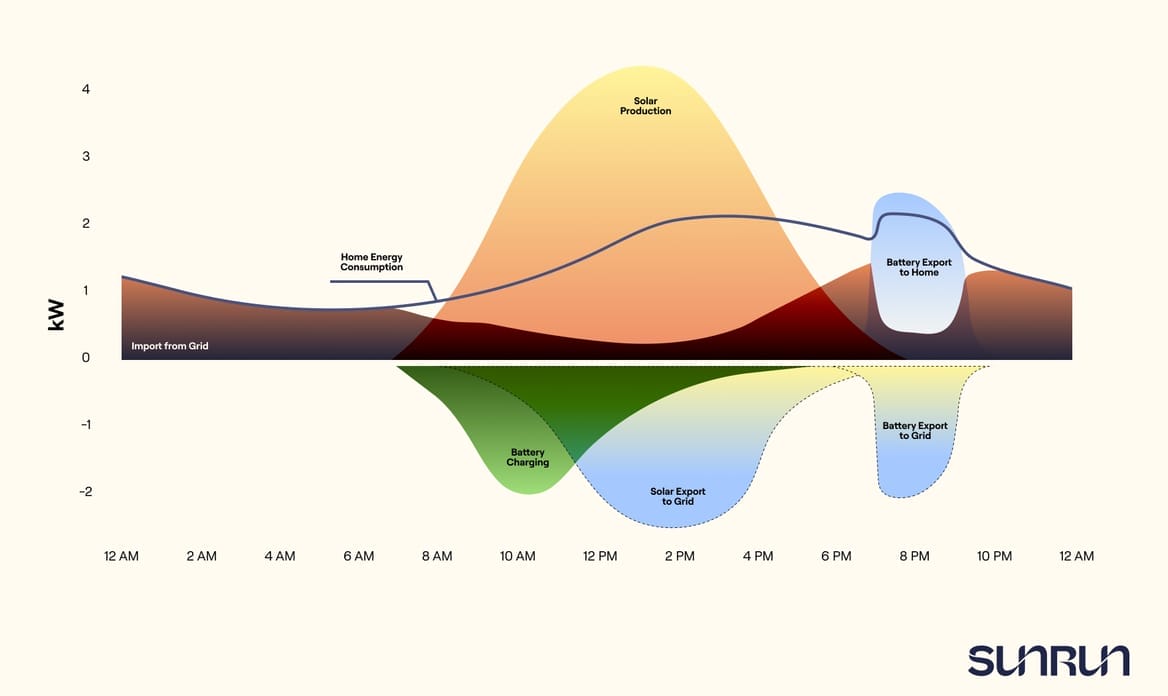
Sunrun project, launched last year, combined 8,500 residential solar-plus-storage systems to consistently discharge an average of just under 30 megawatts of battery power from 7 to 9 p.m. every weekday from August through October
Wind repowering possibly 50% of capacity work this year, 10-20% output bump
Wind developers plan to add some 6.5-7.5 GW of energy to the grid through repowering projects in 2024.
Repowering could account for nearly half of all new wind additions to the grid in 2024.
Advances in wind turbine technology mean replacing outdated equipment with new equipment could boost a wind project’s output by some 10%, Wilmot said. Factor in degradation from aging materials, and you could add another 5% to a wind farm’s productivity. That means repowering could add 10-20% more capacity to the average wind installation built in 2012 or earlier, he said.
Battery records set as prices swing on Australian grid
wholesale market price hit the market floor of minus $1,000 in the morning (around 9.30am grid time) before surging in the late afternoon to the market cap of $16,600 as solar and wind output dried up as the sun went down on a hot Adelaide day.
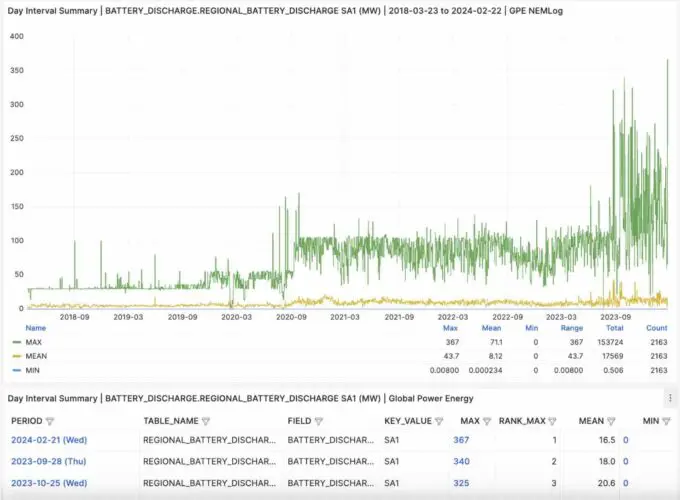
the discharge of the state’s growing fleet of big battery storage units hit a peak output of 367 MW, beating the previous record of 340 MW set in September last year.
share of battery output was 14 per cent of all supply at one stage
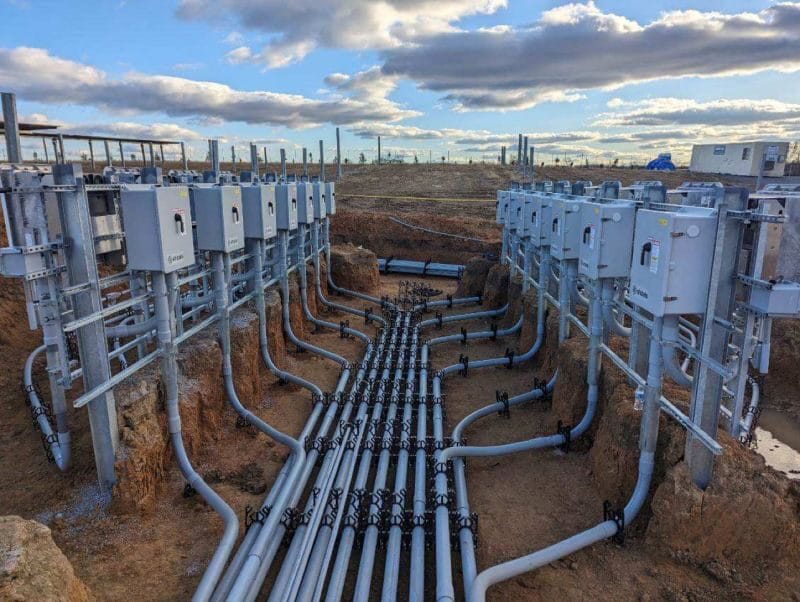
Clean electrical work
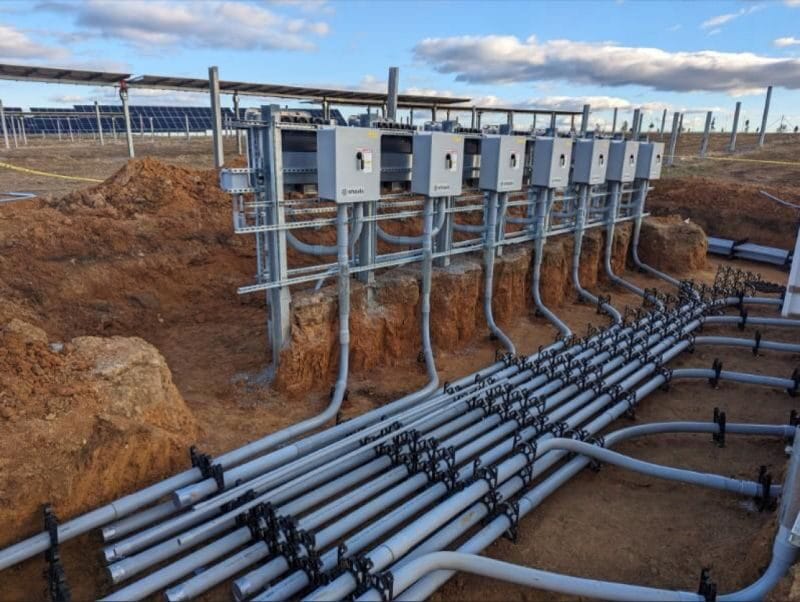
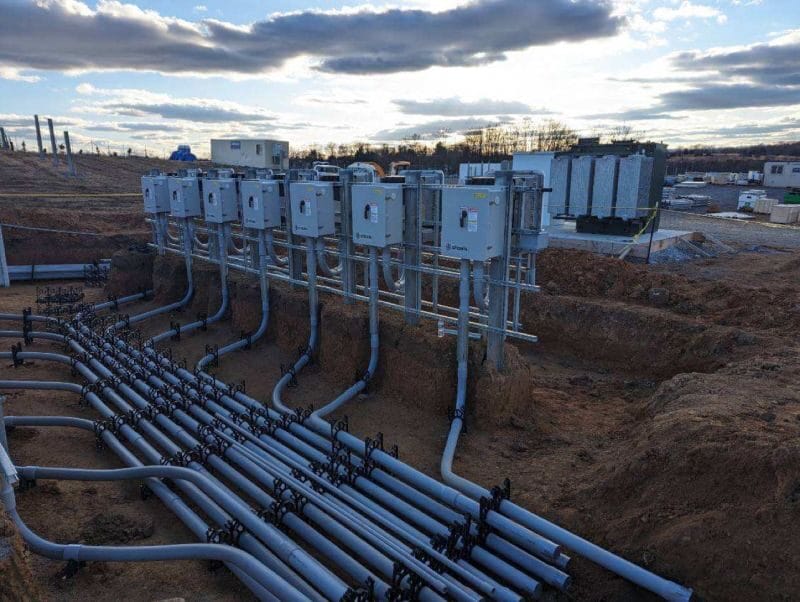
Nice looking trench, conduit, headed up into what I think are disconnects. Clean work by Got Electric.
Long lasting “Triple-junction perovskite–perovskite–silicon solar cell” – breaking efficiency records
A group of researchers led by Germany’sKarlsruher Institut für Technologie(KIT) has fabricated a triple-junction perovskite-perovskite-silicon solar cell that achieved a record-breaking efficiency of 24.4%.
The triple-junction cell is based on a perovskite top cell with an energy bandgap of 1.84 eV, a perovskite middle cell with bandgap of 1.52 eV, and a silicon bottom cell with a bandgap of 1.1 eV. The device achieved an open-circuit voltage of 2.84 V, a short-circuit current of 11.6 mA cm–2, and a fill factor of 74%.
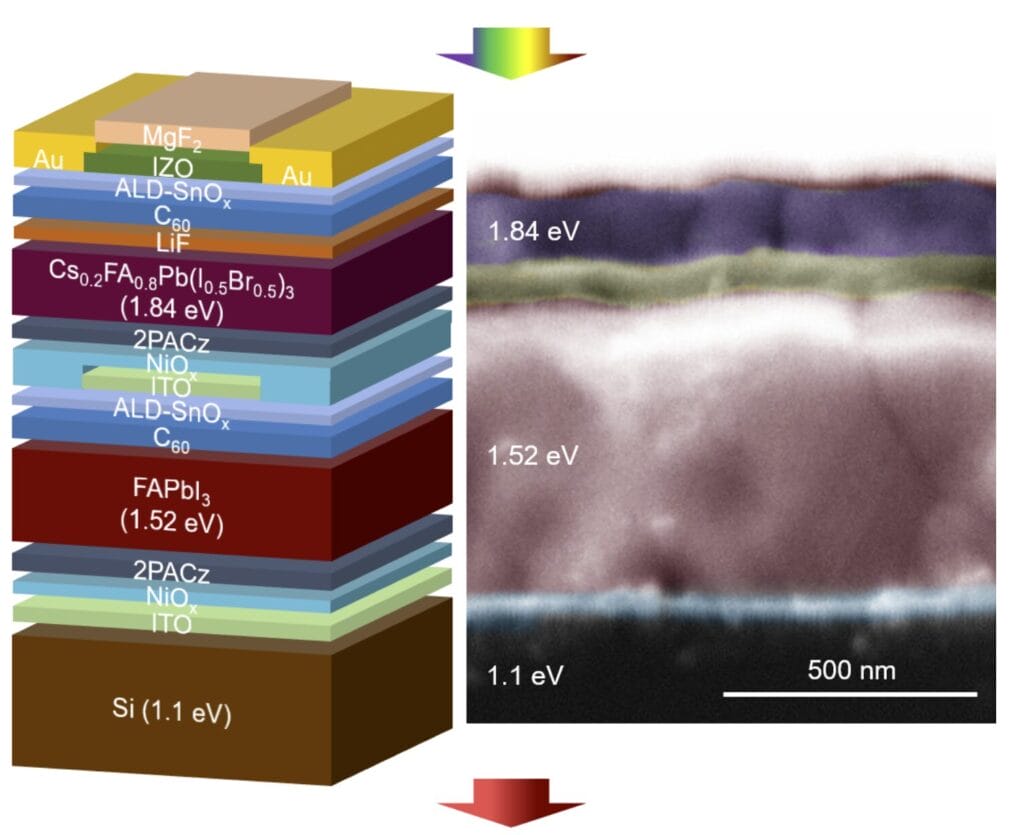
The cell was also able to retain 96.6% of the initial efficiency in dark storage aging at 85 C for 1,081 h.
World’s largest solar panel maker buying U.S. silicon
LONGi has contracted Ferroglobe of the UK to supply it with high-quality quartz and silicon.
The agreement came into force on January 1, 2024. No other details of the quantity, the duration or the financial terms of the deal were disclosed.
Ferroglobe currently has quartz operations in Alabama, US. In October 2023, it acquired a high-purity quartz mine in South Carolina, US with capacity to produce over 300 kt/year with more than 10 years of reserve life. Production is scheduled to begin in H2/2024.
Strata secures $559 Million for 1GWh Battery
Strata Clean Energy(Strata), a leading developer, owner, and operator of renewable energy projects, has closed on a $559 million financing for the construction and ownership of the Scatter Wash battery storage complex. The 255MW/1,020MWh storage facility broke ground on January 18 and is expected to be operational by April 2025.
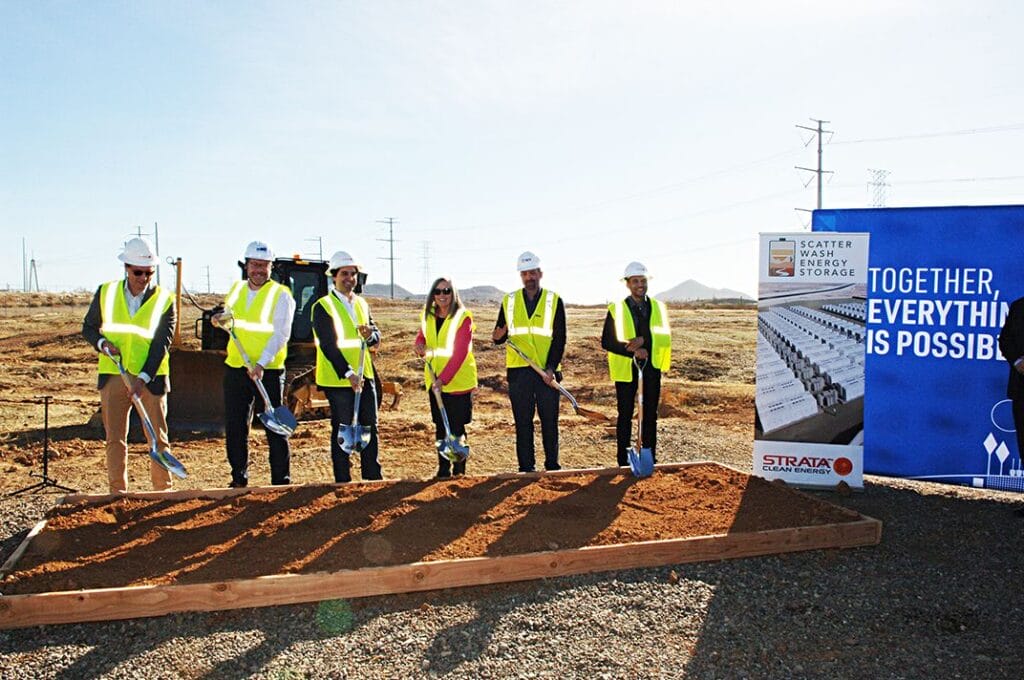
Tesla’s Megapack 2XL, a fully integrated battery system featuring advanced battery technology, software, and power conversion systems, will be used throughout the project.
Strata Clean Energy entered into a 20-year tolling agreement with Arizona Public Service (APS) for its 255 MW / 1 GWh Scatter Wash battery storage complex located in Phoenix.
Solar added to wind facility – 43.5 MWac – comes online, shared interconnection
developer has started commercial operations at the Monte de Vez PV plant, a 21MW solar project that will share a space with the company’s São João wind farm, which has been in operation since 2008.
36 000 bifacial solar panels
“We will continue to develop hybrid projects in Portugal and expect to implement another 700MW in similar projects in the coming years.”
Nextracker wins 1.17-GW order
NexTracker contracted to equip a 1.17-GW installation at the Al Kahfah Solar Power Plant project in Saudi Arabia developed by local power and water company ACWA Power Co.
all-terrain NX Horizon-XTR smart solar tracker systems and marks the company’s largest deployment of this series in a single order to date.
US firm has extended its domestic content and capacity development programme in the Kingdom, engaging a range of local partners to provide raw material and manufacturing support for its trackers at plants across the region.
“No proven commercial model” for co-located solar and storage projects
From the UK:
“People recognise the benefits of co-located projects”, he said, whether it’s shared infrastructure and grid connections or the gradual increase of revenues and capacity that can be generated from a co-located project, “but I think the actual commercial model is still not very well-understood”.
“There is not really the recognition of having a hybrid asset in itself. The market signals for battery storage are really for standalone projects…because the market is so well-developed.”
“We ask developers to put more effort in when they’re bringing a co-located solar asset to the market – that they don’t give you a ready-to-build solar asset and draw some boxes on it and say it’s a co-located asset. Because you can’t value that.”
AC co-located projects can offer more value than DC, as there is a clearer route to market for ancillary services and corporate power purchase agreements are easier to acquire.
$80 million solar tax credit transfer funding solar electricity purchase
Schneider Electric SE will pay $80 million to acquire tax credits, which in turn will help fund four Engie North America projects that are slated to come online in Texas this year.
Schneider will then use the tax savings to buy 110,000 megawatt hours of renewable energy credits annually — for an undisclosed amount — from Engie’s projects over 10 years.
“(Solar) looks like trash, it doesn’t look very good.”
Amherst County, Virginia officials are proposing to cap such uses at either 50 acres or 10 megawatts of electricity generated in the zoning ordinance.
The discussion came after a Virginia Senate committee carried over for a year Senate Bill 567, a measure that would have taken oversight of 50-megawatt solar facilities out of local governing bodies’ review and into the purview of the State Corporation Commission.
“I don’t want to see solar panels all over the county. It looks like trash, it doesn’t look very good.” – Amherst County Supervisor David Pugh
Rooftop solar can cover 45% of USA’s electricity needs
Environment America modeled the viable technical potential for rooftop solar in the United States, finding that it can serve 45% of U.S. electricity demand based on 2022 levels. In 2022, rooftop solar generated about 1.5% of the total electricity consumed.
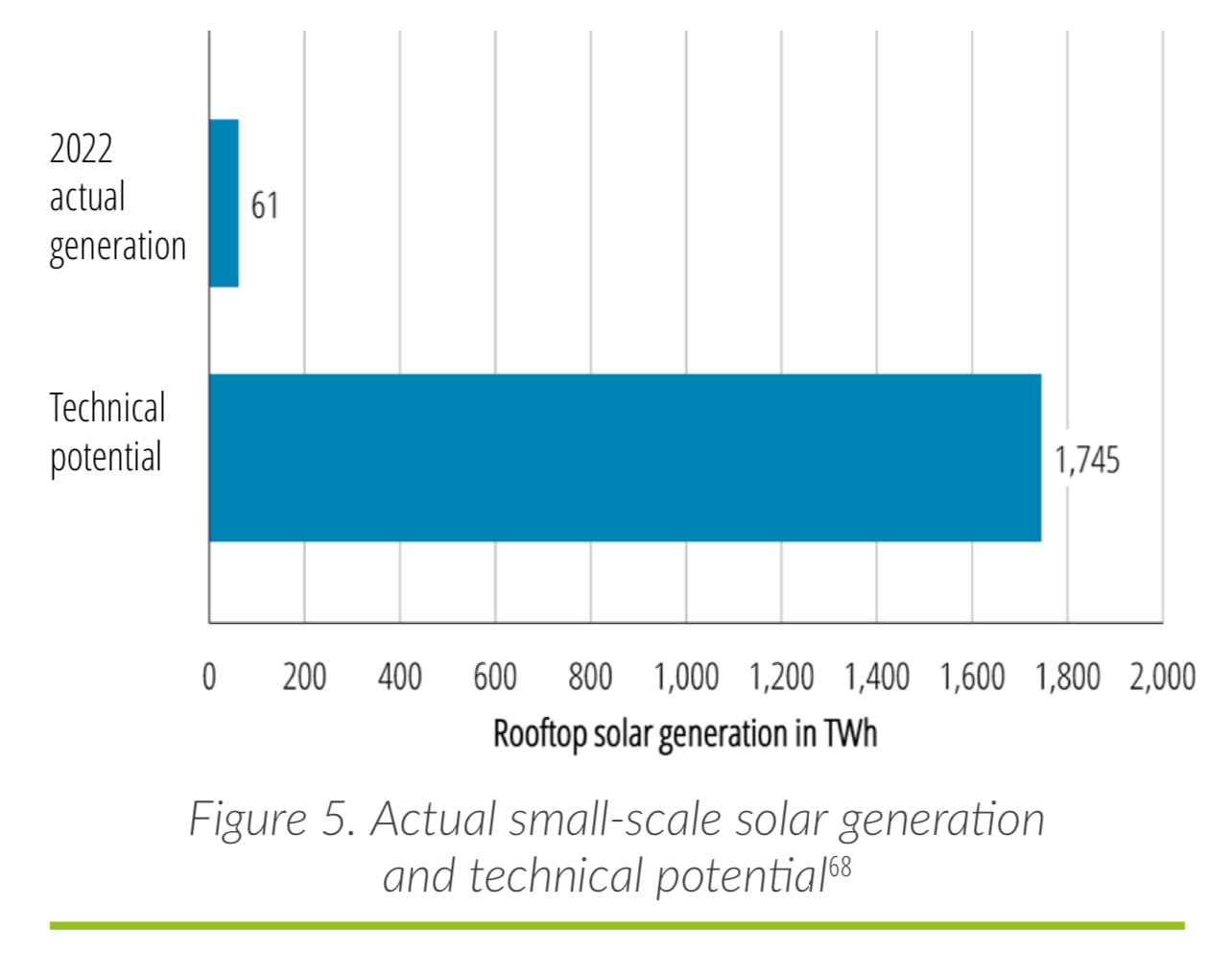
Over 3.9 million American households have opted to move forward with rooftop solar.
The data used to generate this logic is based on research by the National Renewable Energy Laboratory, and US Department of Energy group.
California approves massive 2030 solar and storage goals
new goal from the California Public Utilities Commission would also require the state to build more than 56 GW of additional clean energy generation, including solar, different durations of energy storage, as well as 4.5 GW of offshore wind, according to the agency.
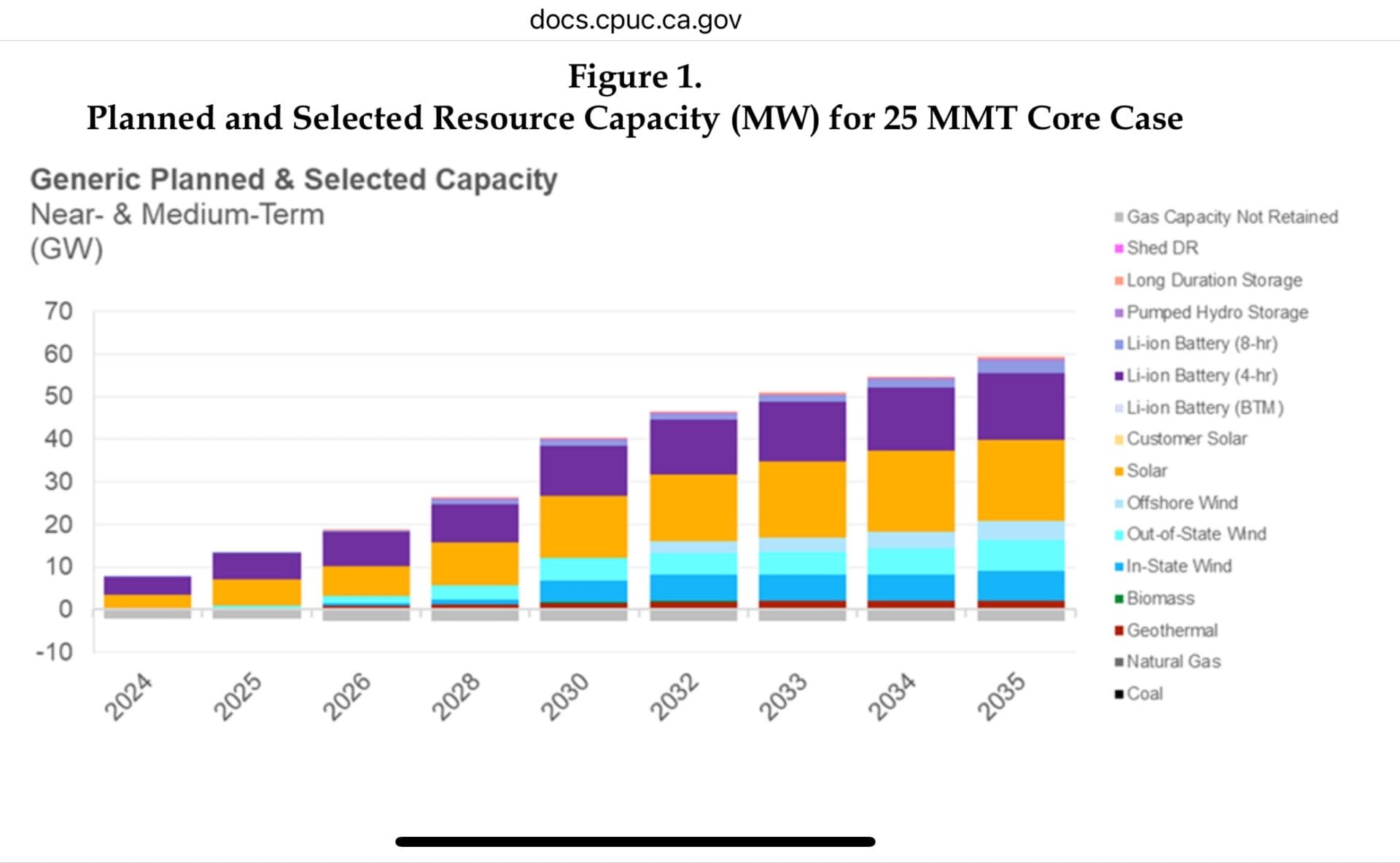
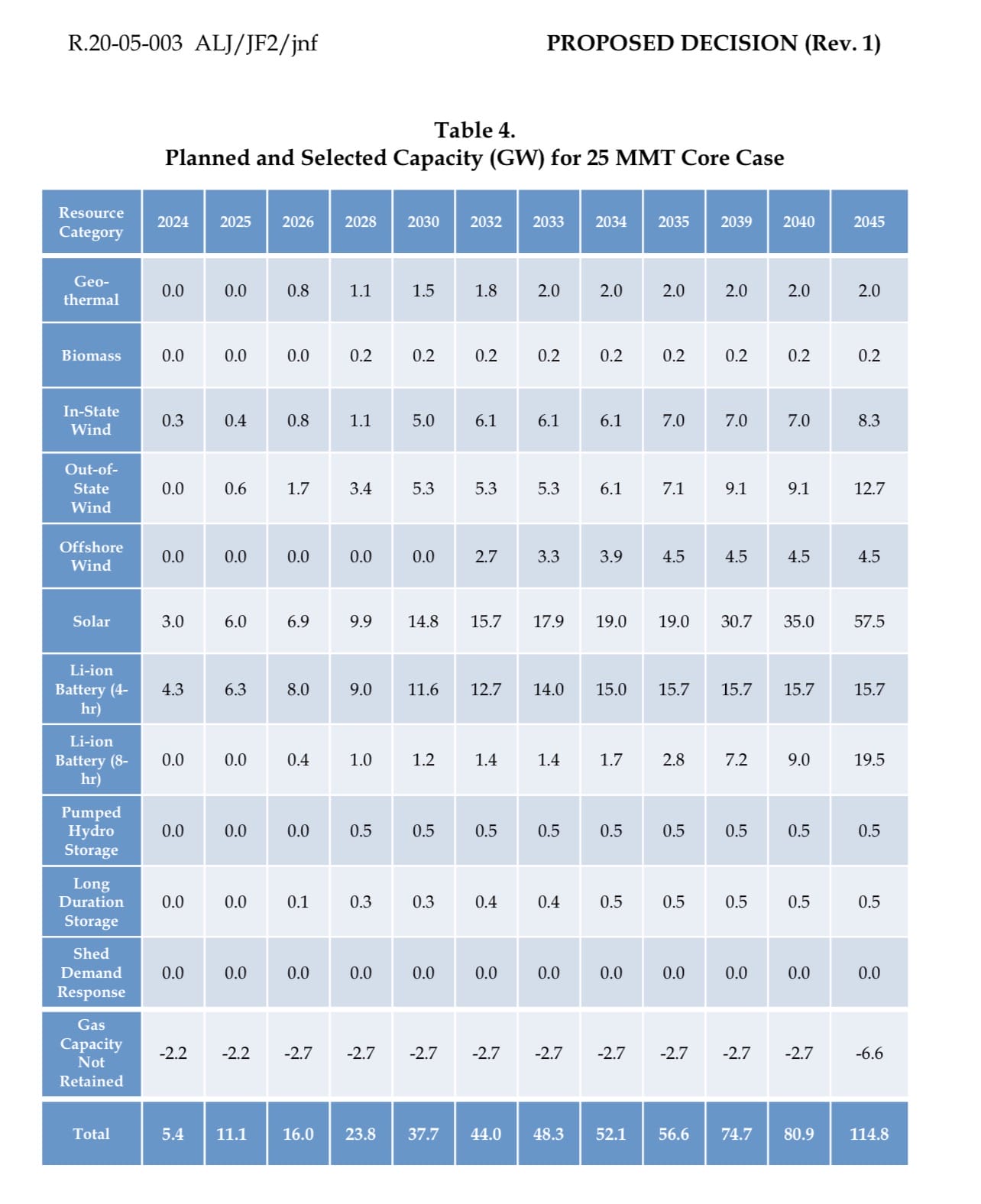
The portfolio would have the state add 19 GW of solar, 15.7 GW of four-hour lithium-ion batteries, 2.8 GW of eight-hour lithium-ion batteries and 0.5 GW of long-duration storage along with the 4.5 GW of offshore wind, by 2035.
Big four – Jinko, Longi, Trina, and JA Solar – 60% of solar modules globally
The gap stood at 20 GW between leading companies and those ranked from the fifth in 2022, and then the gap widened to 30 GW in 2023 with 60 GW difference between the first fourth and the rest. It’s estimated that the top four companies took up around 60% of the total shipments of the top-10 list.
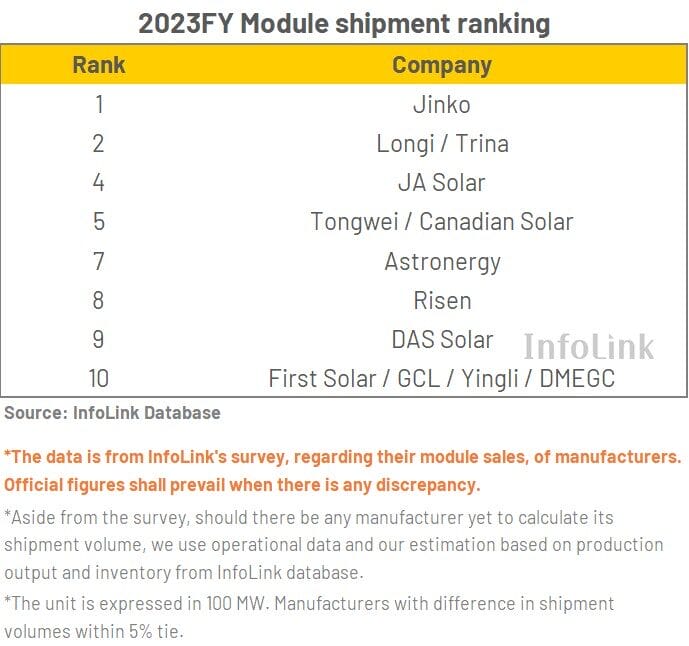
The lowest volume reached 20 GW among those ranked fifth to eighth. Companies outside of the rankings, including Suntech, Solargiga, Q-Cells, Huansheng Solar and Seraphim, saw shipment volume rising to 7-10 GW.
Green hydrogen manufacturing outpacing demand
Global forecasted manufacturing capacity to reach 54 GW by 2027 and up to ~2x of demand in 2030
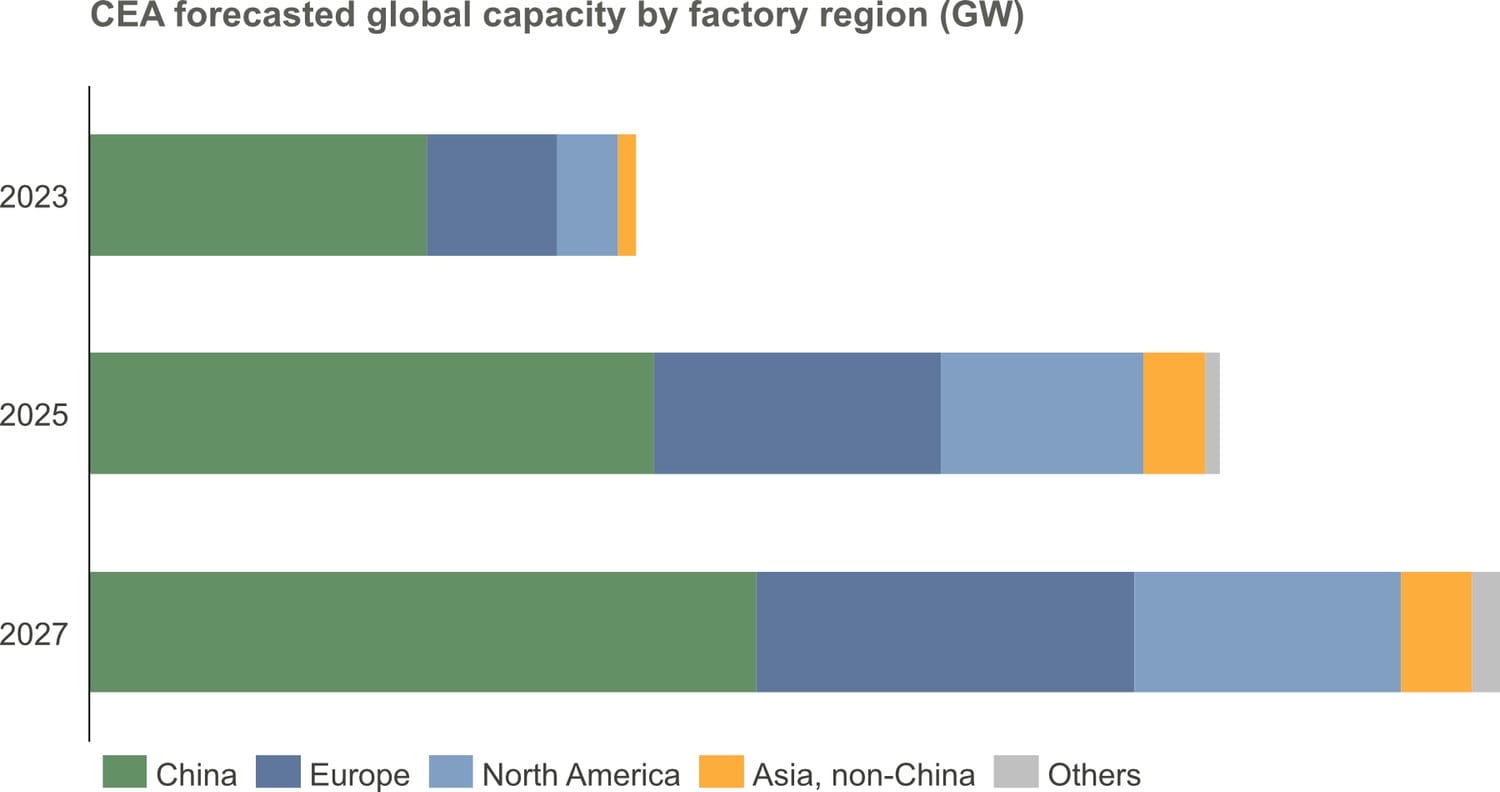
EH2 already has 5 GW of orders lined up for their 1.3 GW factory, so EH2 feels confident about its ability to keep its current facility busy. The company is also contemplating building a second factory.
Jason Mortimer, senior vice president of global sales for EH2 said,
“Green hydrogen is not a thing yet. We are making it a thing, and there’s all kinds of challenges associated with that, but it is happening.”
He also said he sees the tech like solar was prior, growing and figuring things out, both in the buyer and manufacturing side – so give it time.
SolarCycle aiming for 6 GW/year of recycled solar glass in Q Cell deal
US$344 million in investment, the facility will be capable of producing enough solar glass for between 5GW and 6GW of PV capacity annually.
Construction is scheduled to begin in 2024, with operations in 2026.
I don’t think the USA is producing 5-6 GW of solar waste per year. Wonder if this company will need to import to meet goals.
Aiko hits 25.15% solar panel efficiency
Aiko Solar has reported achieving 25.15% conversion efficiency for its ABC modules.
Aiko does not give details about the efficiency improvement or the commercial availability of these panels with 25.15% efficiency, in the announcement on its WeChat channel.
Maxeon just announced their record efficiency actually being installed in Europe, with broader availability in the fall.
I’ve never seen one of these record Aiko modules.
Georgia considering Community Solar, Utility against it
House Bill 1152, customers could subscribe with community solar providers for projects producing no more than six megawatts of power. Because the measure calls for the amount of credit on bills community solar customers would receive to be determined by the state Public Service Commission (PSC), it would be limited to Georgia Power customers since the state’s other utilities are not regulated by the PSC.
representatives of Georgia Power, who spoke out against the bill, said there is no energy supply shortage in Georgia that needs to be addressed.
The subcommittee was only scheduled to hold a hearing on the legislation Monday and took no action on the bill.
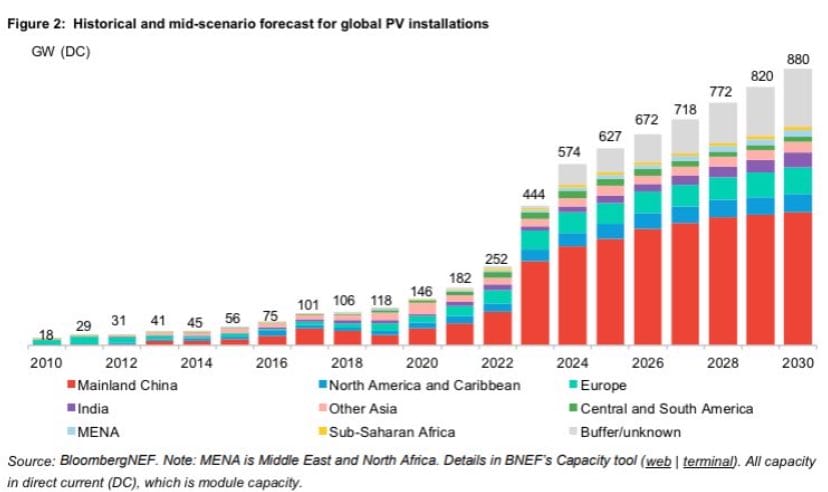
Bloomberg increases solar projections to 575 GW deployed in 2024 – <30% jump over '23

For now, logically, solar panels as cheap as they’re gonna get
Our fundamental cost modelling allows us to look at where ‘sustainable pricing’ can go. In the near term it looks like spot prices have largely stabilised. Potential oversupply could push prices down even further, but ‘sustainable’ cost reductions in the medium term look fairly difficult,” said Barrows.
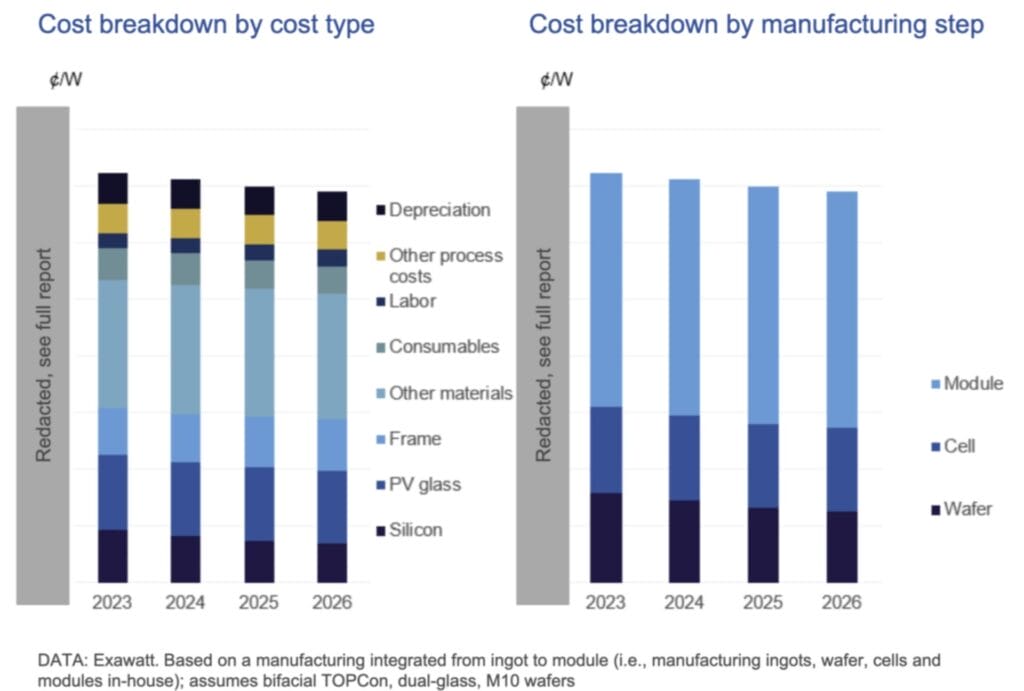
The analyst noted currently “materials and consumables” make up 80% of solar panel production costs, thus there is little room.
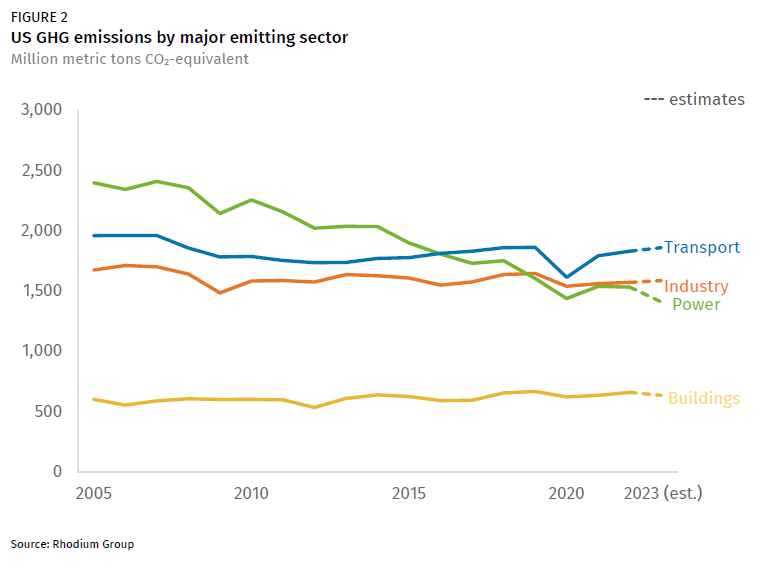
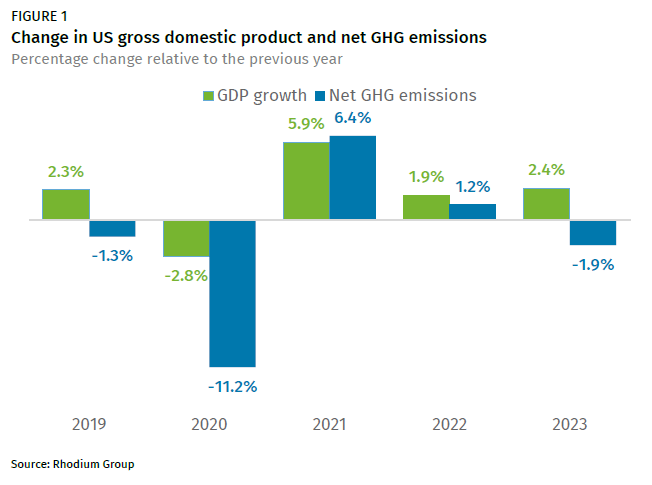
U.S. total emissions down 1.6%, power grid down 8%, GDP up 2.4%
We estimate that emissions were down 1.9% year-on-year in 2023, while the economy expanded by 2.4% over the course of the year. US emissions remained below pre-pandemic levels and dropped to 17.2% below 2005 levels.
Transportation sector emissions rose by 1.6%
Increases in domestic oil and gas production led to a 1% increase in industrial emissions.
8% drop in emissions in the power sector
4% drop from residential and commercial buildings
Solar panels die 6.6% to 10% faster in a hotter Australia
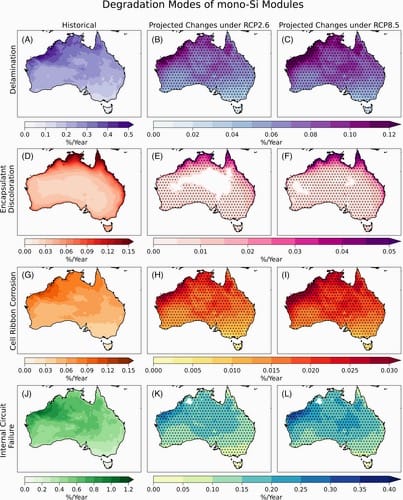
Higher heat means more solar panel degradation. Australian researchers project solar panel breakdown rates by component due to increased temperatures.
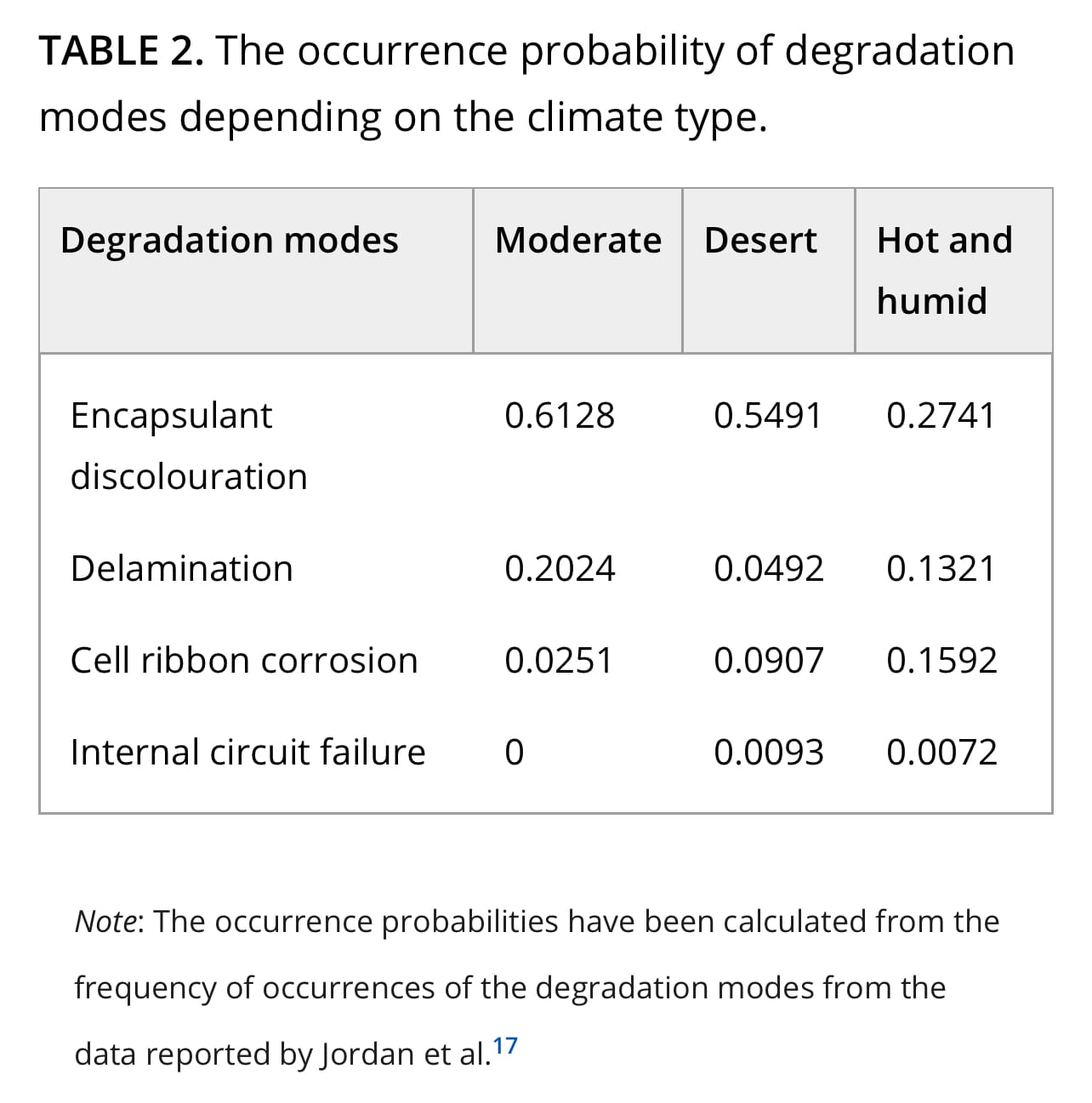
We estimate that the weighted average degradation rate will increase up to 0.1%/year by 2059. On assessing the impacts of module degradation on future PV power generation and levelized cost of energy, we project up to 8.5% increase in power loss that leads to ~10% rise in future energy price…standard degradation rates vary from 0.26%/year to 2.3%/year depending on the dominant degradation mechanism and module type…ultraviolet (UV) radiation, temperature and humidity as the main climate stresses that lead to different degradation mechanisms by themselves or in synergy…Hot spots (33%) are the most common mode of degradation in monocrystalline-silicon (mono-Si) modules. The other common modes of degradation in mono-Si modules are ribbon discoloration (20%), glass breakage (12%), encapsulant discoloration (10%), cell breakage (9%) and PID (8%).
Results:
Our results show an increase in LCOE throughout the country under both future scenarios. We observe maximum changes in LCOE in the north-western part of the country up to 6.5% under RCP2.6 (Figure 3c) and up to 10% under RCP8.5 (Figure 3d). This means that energy will cost an additional 8 cents/kWh in those regions. The cost of energy in Eastern Australia is projected to increase up to 3 cents/kWh (up to 5%) in the future from the present rate (~70 cents/kWh). As expected, Central Australia is projected to undergo the least changes in future LCOE (up to 2%). We project that by the end of the century, the energy cost shall increase up to 8% under the RCP2.6 scenario (Figure S3). Under RCP8.5, we predict a 2% increase in LCOE near the central regions of Australia, up to 8% in the east and south and up to 15% in the north due to an increase in future power loss (Figure S3).
Robot dog to inspect substations
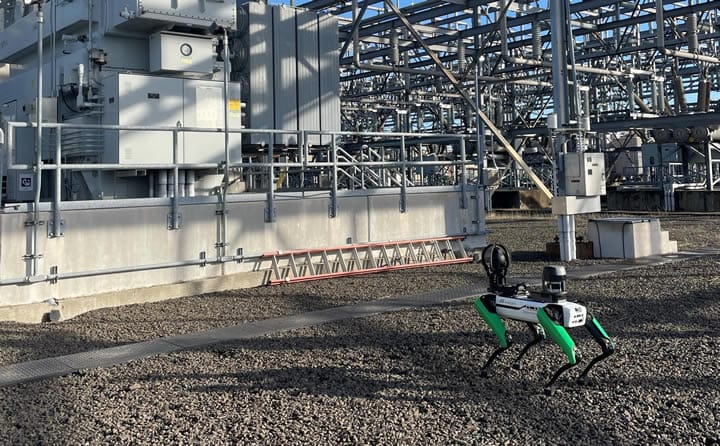
mobile robot called Spot® modeled after a dog to complete visual and thermal inspections at two substations…outfitted with a camera that has a 30 times optical zoom and an infrared camera capable of taking thermal readings to compare the transformer and breaker phases… is also an option to attach an acoustic sensor that can detect, locate, and visualize changes in sound signatures, malfunctioning equipment, and other noise anomalies in real-time
Netherlands incentivizing perovskite-silicon tandem solar manufacturing
a public proposal to support the production of heterojunction and perovskite-silicon tandem modules, as well as building- and vehicle-integrated PV panels, with a maximum allocation of €70 million ($75.1 million) per solar manufacturing project
World’s most efficient solar panel for sale in 2024
new solar installation featuring its next-generation Maxeon IBC solar panels with the world’s highest conversion rate efficiency of any commercial solar panels, at 24.1%. This is the first project powered by these new Maxeon 7 panels
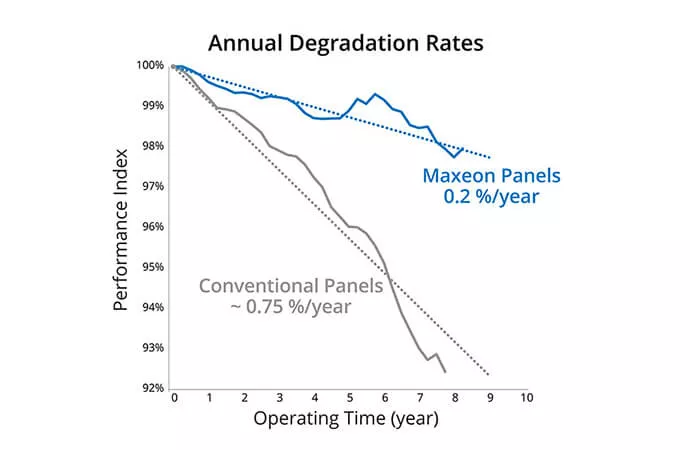
Most efficient module you can buy, if you can find it of course.
Maxeon 7 panels are currently available for selected partners in Europe. Full commercial availability across regions is expected in the third quarter of 2024
Highway solar “slam dunk” for Rhode Island
Rhode Island commission recommends 15 sites along the highway to install solar power. An analysis suggests it’s enough for 100,000 kW – average house needs 10 kW.
“It’s a slam dunk,” Robert Rocchio, a chief engineer at RIDOT, told commission members last month. “It’s a way of extracting value from land that otherwise has no utility.”
State and federal road groups will setup standard construction requirements, after which contractor bids will be requested.
53 GW new solar, 14.3 GW new batteries for USA in 2024
US projecting 53 GW of new solar, and over 81% of new power grid capacity from solar+batteries.
Utility scale solar is projected to deploy 45 GW of module capacity, while distributed solar is expected to deploy at least 8 GW of capacity. Energy storage is expected to deploy 14.3 GW of power output capacity – which is almost equal to all the batteries (15.5 GW) installed in total in the country in all years prior.
War driving Ukrainian solar
‘Galushchenko said last year Ukraine constructed around 200 megawatts of wind and around 150 megawatts of solar power capacity.
Even if “it’s not a big amount, I can say that this is due to the war,” he said.’
Russian forces have destroyed 11 coalmines, which they did to weaken Kyiv’s capacity to produce energy, Ukraine has eight power plants in non-occupied territory that can run on coal or natural gas, of which three have been knocked out of action.
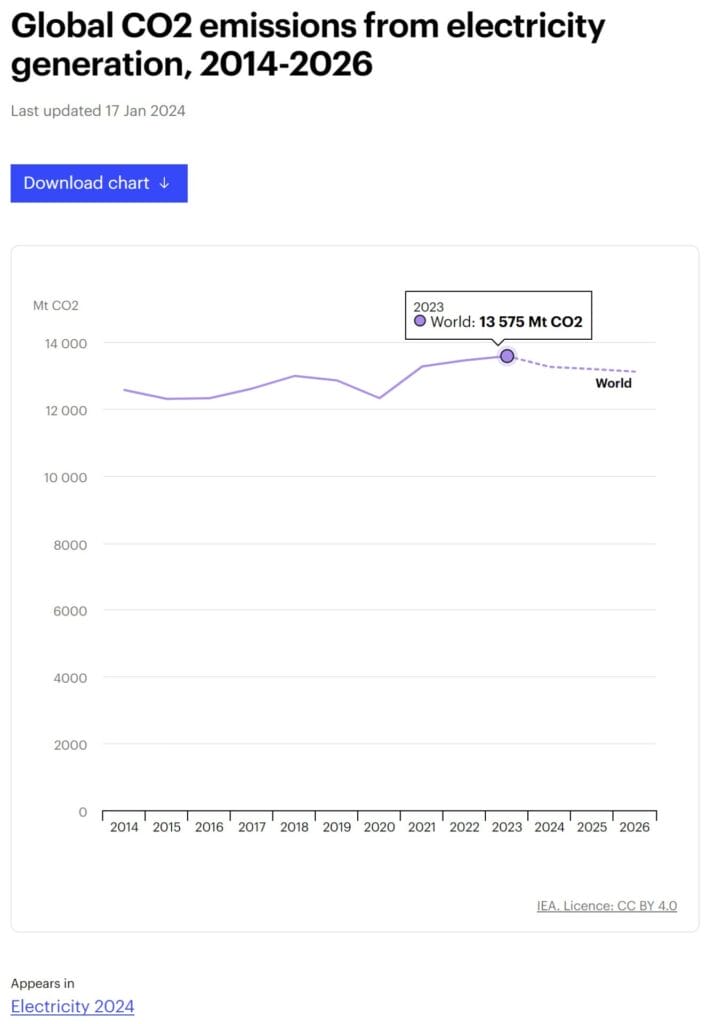
China coal use & global electricity emissions falling
(China’s) rapid growth of renewables, supported by rising nuclear generation, is set to displace global coal-fired generation, which is forecast to fall by an average of 1.7% annually through 2026.This follows a 1.6% increase in coal-fired output in 2023 amid droughts in India and China that reduced hydropower output and increased coal-fired generation, more than offsetting strong declines in coal-fired generation in the United States and the European Union.
While it is true that China is building more coal generation capacity, they’re using it less. Globally, this can also be seen in that all of the world’s electricity demand growth is thought to be met by new clean (nuclear, solar, wind, hydro) electricity generation. This is also occurring while global electricity demand is set to grow by an average 3.4% annually through 2026.
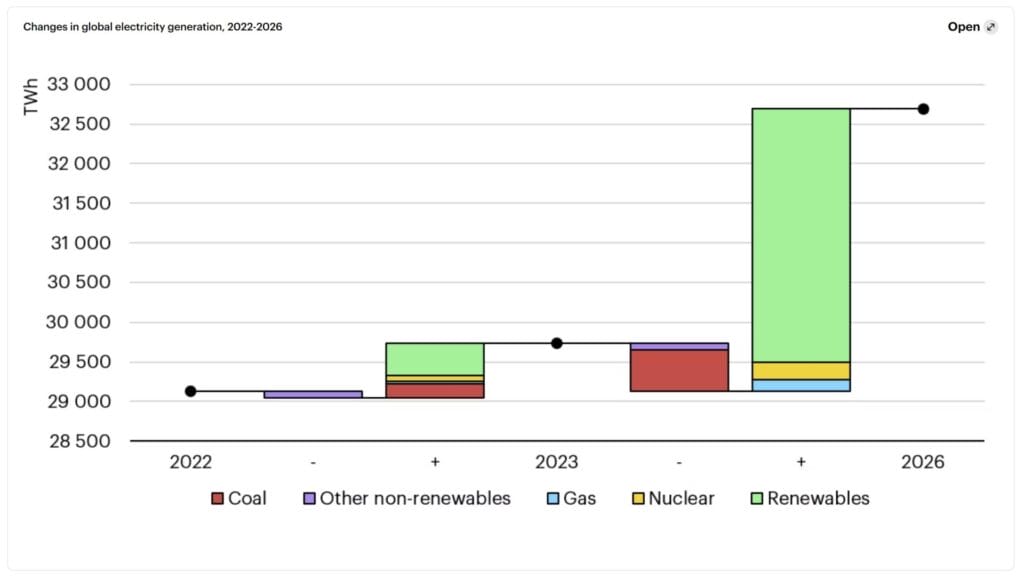
The report, from the IEA, also says that emissions from electricity – on a global level – are starting to fall. This happens as renewables are expanding their presence from 30% of all electricity, to 37% – with the IEA saying this growth is being largely supported by “ever cheaper solar PV”.
Cool solar pictures with Patagonia gear by Jesse Burke
Jesse Burke, a Rhode Island based photographer, reached out to us via LinkedIn to advertise his services – specifically noting that he’d done some work with Patagonia at a solar project. Here are some of those images from his website.
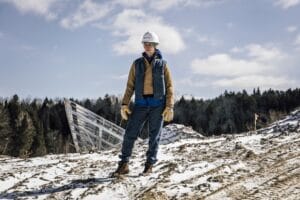
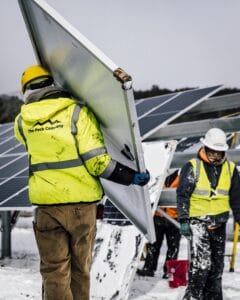
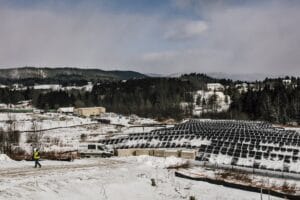


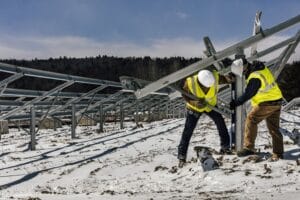
I really like the image with the icicles coming from the solar module.
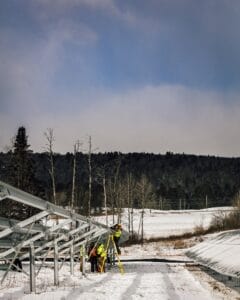
Bird droppings accounted for about 46.42% to 89.18% of efficiency loss [in solar panels].
The biggest problem? Bird droppings.
Loose wiring
The natural movement of birds and animals can loosen panel wiring. When connections are compromised, it can have a negative effect on an entire system and efficiency can suffer. Squirrels also like to gnaw on the wires, for some reason known only to themselves.
Birds and other animals sometimes decide to build nests or burrows among solar panels. The new residents then constantly move around the system, increasing the risk of poor connections.
1.7 GW of solar, and 1.3 GW of storage moving along, BLM also updates solar plan
Department of the Interior announced updated roadmap for solar energy development across the West…announced next steps on projects in Arizona, California and Nevada – ~1,700 MW solar & 1,300 MW of storage.
During the Biden-Harris administration, the BLM has approved 47 clean energy projects and permitted 11,236 megawatts of wind, solar and geothermal energy on public lands.
BLM & NREL forecasted national clean energy needs and determined ~700,000 acres of public lands would be needed…BLM’s preferred alternative in the updated Western Solar Plan would provide approximately 22 million acres of land open for solar application, giving maximum flexibility to reach the nation’s clean energy goals.
The analysis announced today evaluates six alternatives, each proposing to make different amounts of public land available to solar development applications under different criteria such as proximity to transmission infrastructure, designated critical habitat, or other important ecological and cultural resources.
Fire at South Australian solar farm
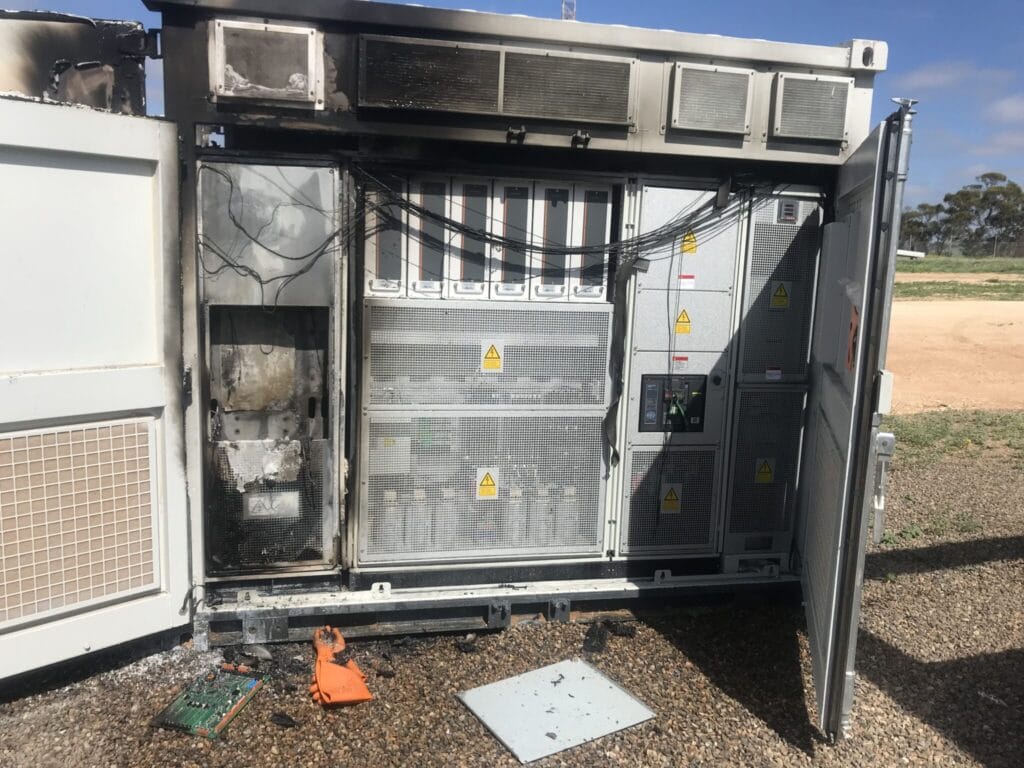
Inverter burst into flames at the 30 MW Mannum Stage 2 solar farm, which is being developed near the town of Mannum, South Australia. A worker is now being treated in the hospital for burns. Estimated $250,000 damage bill. The CFS said 10 firefighters responded on Tuesday morning after an emergency call about an inverter in “bursting into flames” at the solar farm site.
“CFS crews managed to keep the fire contained to the shipping container and stop it spreading to nearby solar panels,” CFS said in a statement.
6 gigawatts of US agrivoltaics
There is now a 1.3 GW agrivoltaic array in northern Indiana, in New York state, which will deliver its first specialty crop array in 2024 and the Shines program, in Illinois, has more than 50 projects which are choosing to include agricultural production within half of their arrays. The National Renewable Energy Laboratory (NREL) says that there is nearly 6 GW of agrivoltaic generation capacity operating in the United States, ranging from solar panels on grazing pasture to crop fields.
Vertical solar at higher latitudes generate more
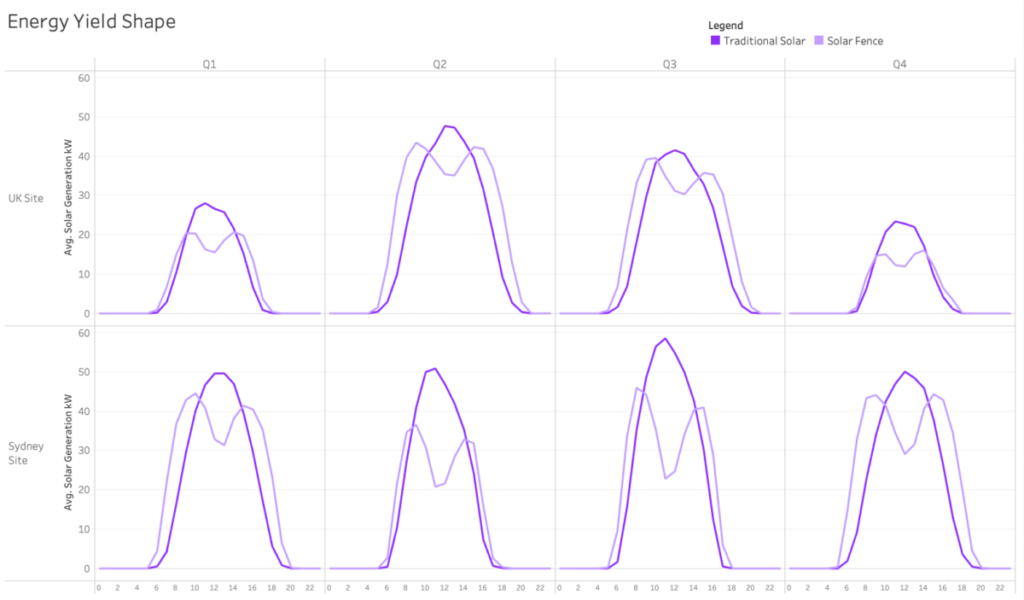
Unsurprisingly the yield curve for the solar fence was different to ground-mount solar, with a dip in the middle of the day, but on an annual basis, overall yields were slightly higher for the solar fence than for the conventional system. “We’re seeing a 10% total uplift in yield in London and a 3% increase in Sydney,”Gridcogsaid, noting that while the physical performance more or less aligned with what was expected, the commercial story provided some interesting results.
“On an annual basis the advantage of the solar fence is even more obvious,” Gridcog said. “The increase in revenue is significantly higher than the underlying increase in yield; in the case of Sydney a 3% increase in yield has translated into a 30% increase in revenue.”
Solar supply chain pricing stabilizing
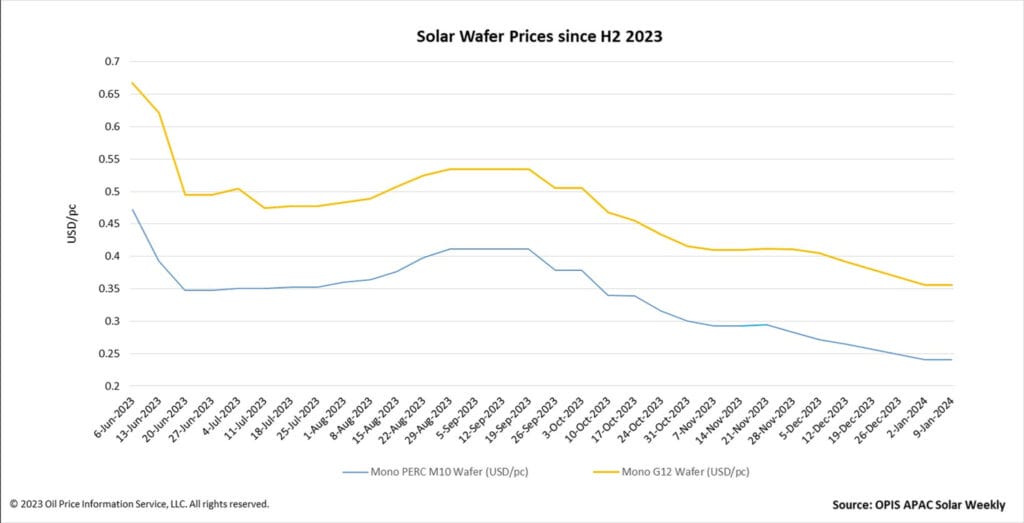
FOB China prices of Mono PERC M10 wafers trended flat on-week at $0.241 per piece (pc), while Mono PERC G12 wafer prices remained at $0.356/pc. According to the projection of the Silicon Industry of China Nonferrous Metals Industry Association, China’s overall wafer production output in January might range from 54 GW to 56 GW, indicating a decline of 7.92% month over month. According to a market expert, wafer manufacturers still try their best to maintain operating rates at a particular level despite the continuous wafer overcapacity. At present, polysilicon prices make up about half of wafer production costs.
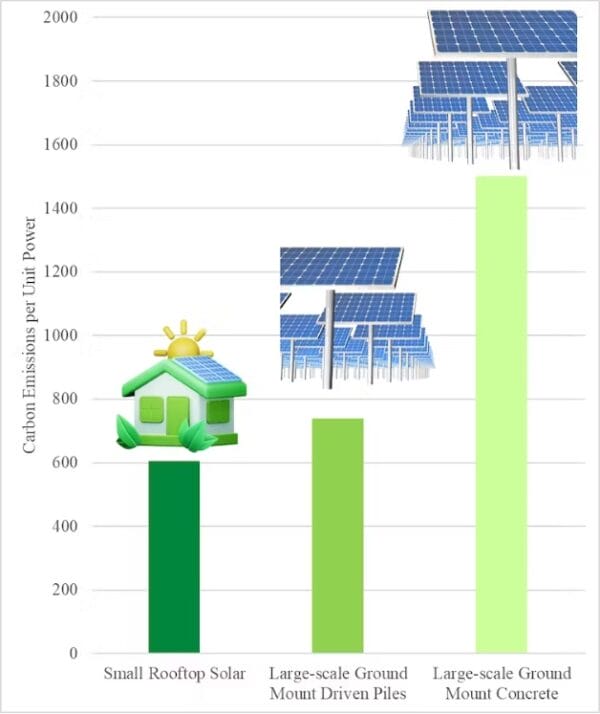
Rooftop solar has shorter energy and CO2 payback than utility scale
‘rooftop solar systems require 21% to 54% less input energy, make 18% to 59% less carbon dioxide equivalent of greenhouse gas emissions, and consume a reducedquantity of water ranging from 1% to 12% per kilowatt-peak. Researchers calculated energy payback time of rooftop solar systems is approximately 51% to 57% lower than that of ground-mounted solar systems across all locations, with the main reason being that rooftop systems don’t required the racking or trackers used in large-scale projects. Plus they are usually closer to transmission lines, whereas many utility-scale installations need lines added or they must account for transmission losses if running a long distance. The researchers determined that the carbon dioxide payback time was 378% to 428% longer for ground mount large-scale solar installations, compared to rooftop solar for the same modules.
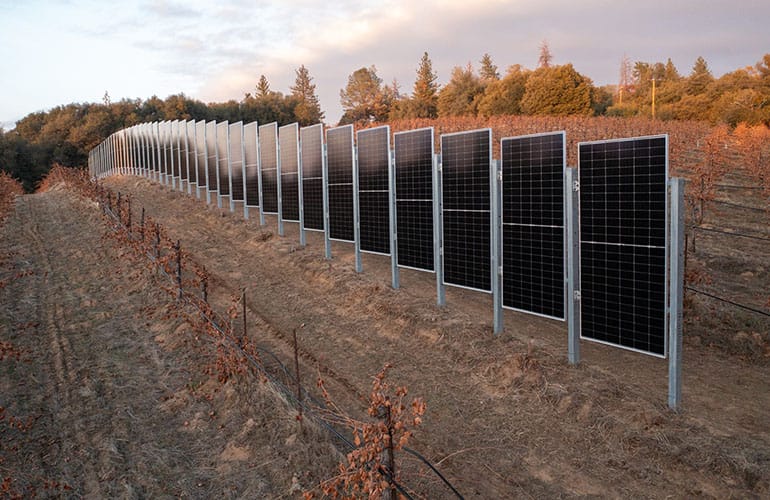
Vertical solar and farming in Vermont
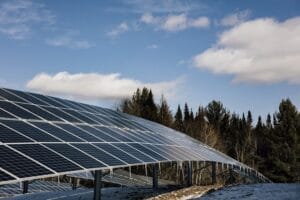
The project, which is a collaboration with an American solar company called iSun, will cover nearly 4 acres and grow carrots, beetroot, and saffron crops.
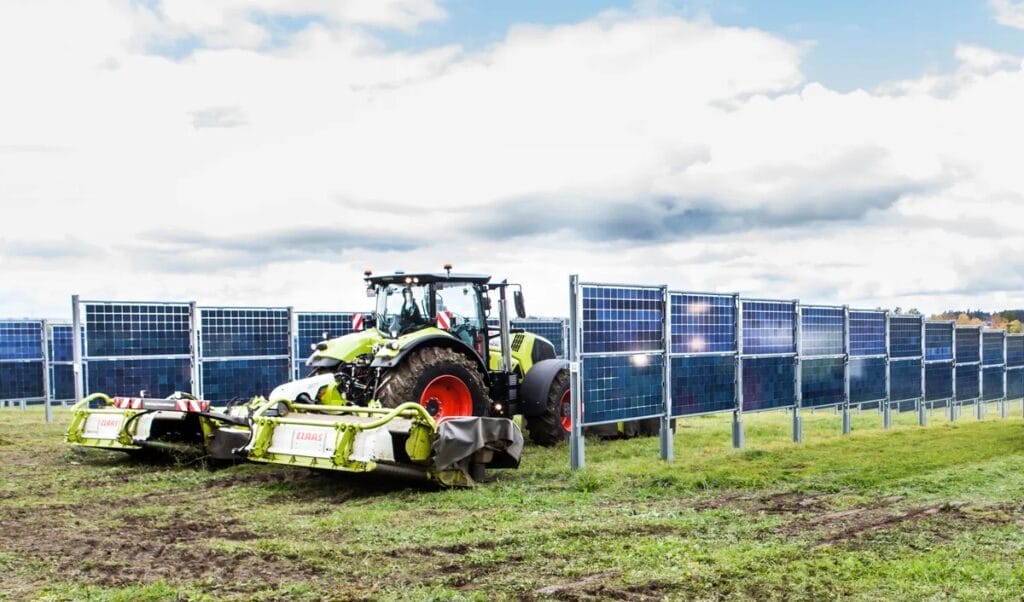
Vertical solar system completes UL 2703 testing
Sunstall announced that its vertical solar systemSunzaun has completed testing and complies with UL 2703, the standard that addresses solar mounting and racking systems.
Features
Accommodates bifacial modules in portrait orientation
Co-location of solar PV and agriculture
Harvesting between Sunzaun rows
Shading results in less UV stress to crops
Fence for livestock or property
Wind protection
Energy supply next to highways, railroads or any other location benefiting from vertical solar
Technical Data
UL 2703 certification in progress
Up to 4 feet ground clearance
Up to 0.084 psi wind load
Usable in slopes up to 15 degrees
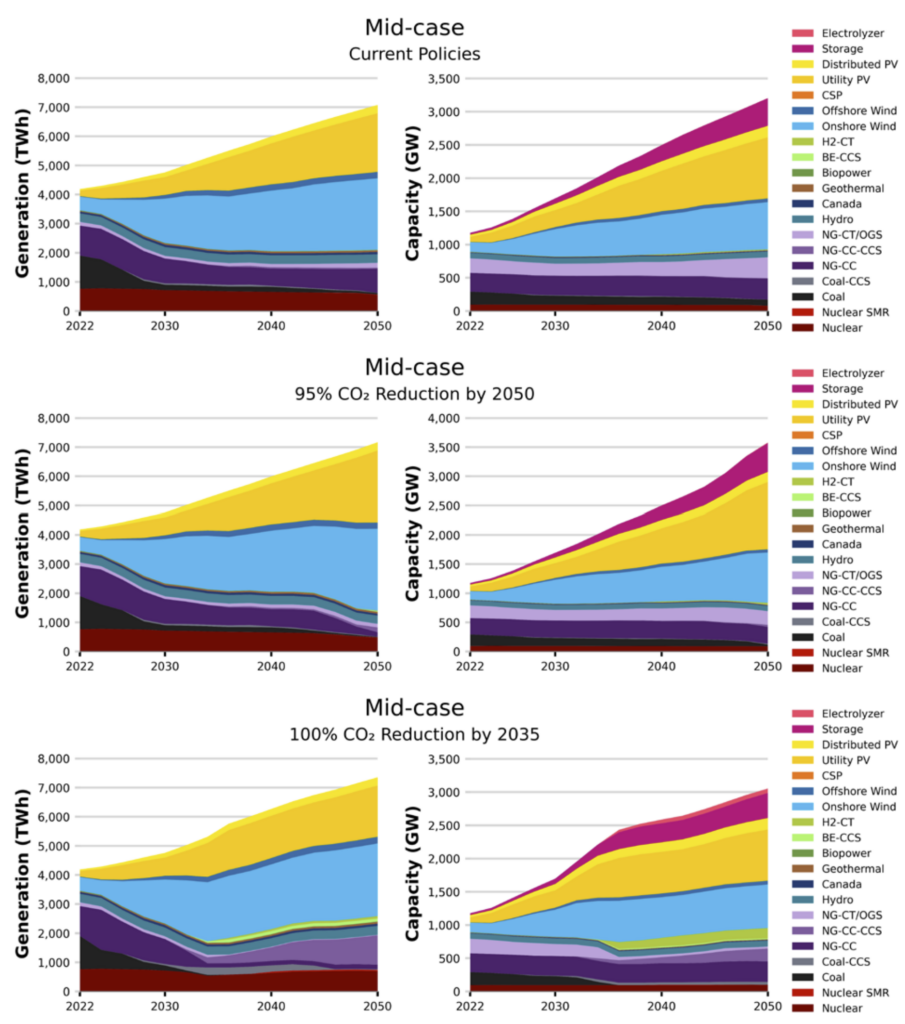
NREL sees gas capacity going up, even with decarbonization
In a “mid-case” scenario tied to existing policies, U.S. gas-fired capacity increases by 200 GW through 2050, National Renewable Energy Laboratory researchers said ina report released Tuesday. And, even when cutting carbon emissions by 95%, gas-fired capacity would grow by 130 GW by mid-century, according to the modeling. “We will continue to use fossil fuels during times of critical demand to provide grid resilience and reliability,” NREL said.
The mid-case modeling shows U.S. solar capacity soaring to 1,090 GW and wind capacity jumping to 770 GW by 2050, or about tens times and five times more than existing capacity, respectively.
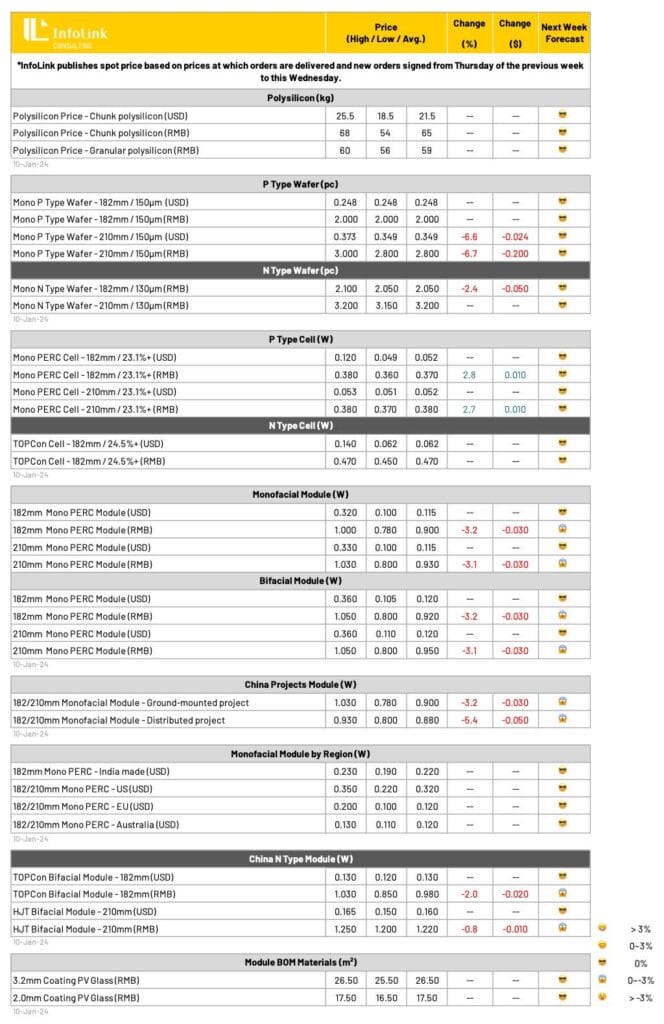
Cheap modules messing up solar recycling
Prices of new solar modules continue to decline; they’re forecast to fall to as little as 10 cents per watt by the end of 2024. Squeezing the secondary market. With prices for new modules so low, the demand for used panels has slackened. In fact, We Recycle Solar, which has a multi-pronged business that includes solar decommissioning and panel recycling, estimates that the average cost just to truck and handle panels being decommissioned is between five and seven cents per watt.
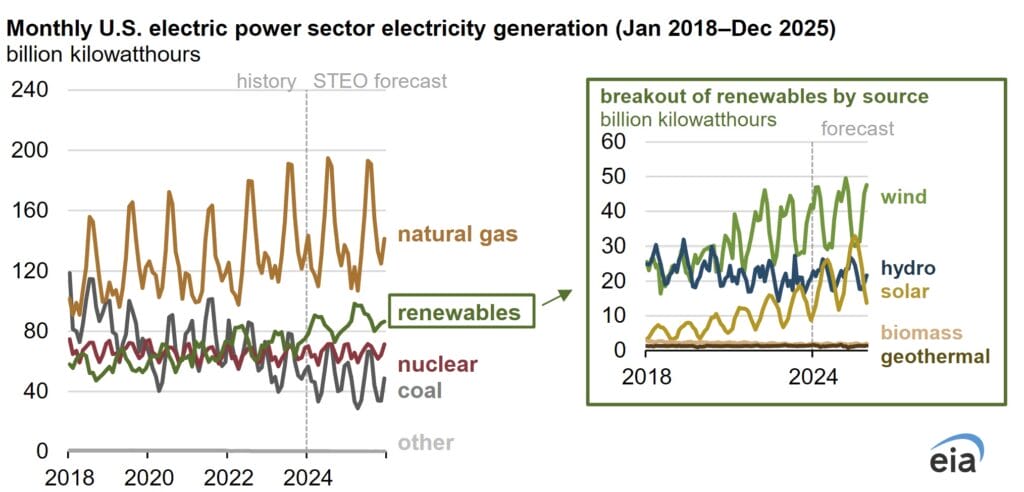
Solar and wind to lead U.S. power grid next two years
As a result of new solar projects coming on line this year, we forecast that U.S. solar power generation will grow 75% from 163 billion kilowatthours (kWh) in 2023 to 286 billion kWh in 2025. We expect that wind power generation will grow 11% from 430 billion kWh in 2023 to 476 billion kWh in 2025. In 2023, the U.S. electric power sector produced 4,017 billion kilowatthours (kWh) of electric power. Renewable sources—wind, solar, hydro, biomass, and geothermal—accounted for 22% of generation, or 874 billion kWh, last year.
Planned solar projects increase solar capacity operated by the electric power sector 38% from 95 gigawatts (GW) at the end of 2023 to 131 GW by the end of 2024. We expect wind capacity to stay relatively flat at 156 GW by the end of 2024, compared with 149 GW in December 2023.
Wind turbine collapses in Colorado
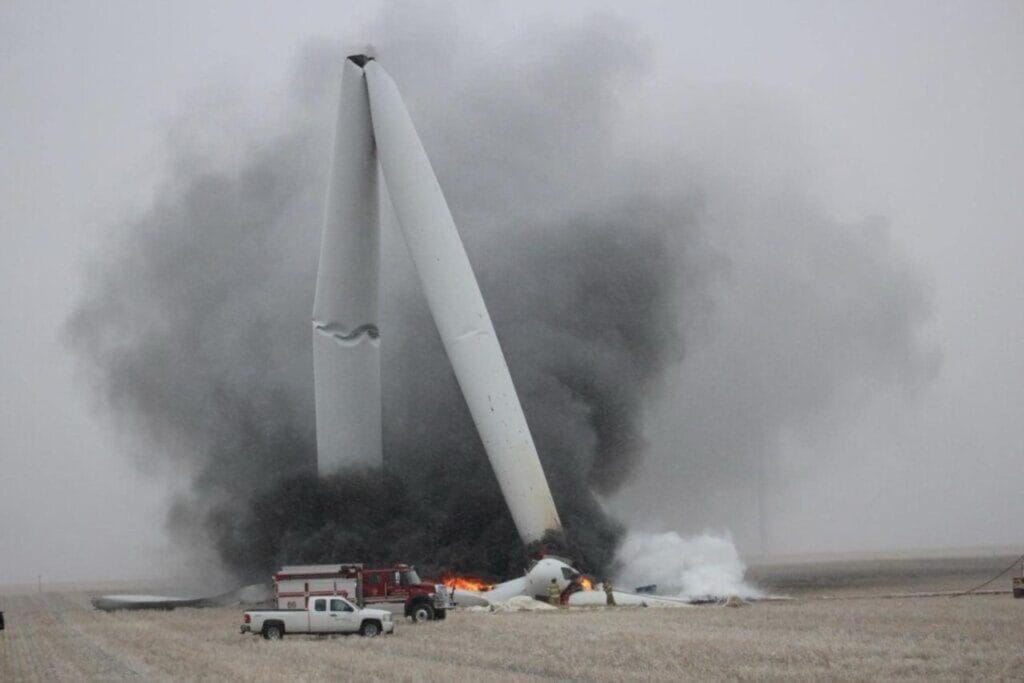
Wind turbine at a northern Colorado wind farm folded in half and caught fire Thursday morning.
The incident was reported at 8 a.m. No injuries were reported. Oil and grease from the generator caught fire after the tower’s collapse. The fallen turbine is one of 19 units in the Spring Canyon II project that came online in 2014. Invenergy employees ensured the fire department did not spray water on the fire until the generator had been grounded or the turbine disconnected from 480,000-volt power grid. His volunteer firefighters know not to do that, thanks in part to annual training sessions with Invenergy workers.

Perovskite company raises $6 million
Tandem PV has raised an additional $6 million, bringing its total to $27 million in venture capital and government support. The company will use the funds to advance research and development and plans to build its first manufacturing facility.
The company is producing tandem perovskite panels with 26% efficiency, which is roughly 25% more powerful than the average silicon solar panel. Tandem PV has demonstrated the equivalent of decades of projected durability in the lab. The company plans to obtain independent industry-standard validation of efficiency and durability, expected to rise further, during 2024.
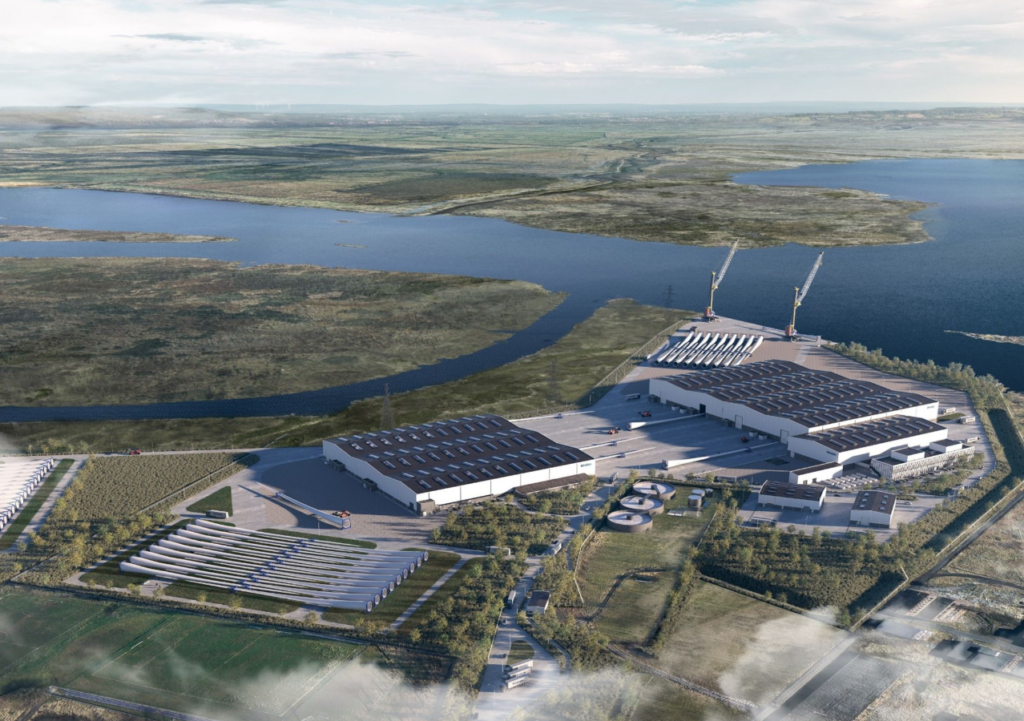
Wind made steel going into wind turbine
The tower sections at Baltic Power will be made of ArcelorMittal’s XCarb recycled and renewably produced heavy plate steel.
The company will produce steel slabs at its steel mill Industeel Charleroi in Belgium, using 100 per cent steel scrap which is melted in an electric arc furnace fully powered by wind energy. The steel slabs will then be transformed into heavy plates used to fabricate wind turbine towers at ArcelorMittal’s heavy plate mill in Gijon, Spain.
Using this low-emission steel in the top two sections of an offshore turbine tower would translate to approximately 25 per cent emission reduction, compared to a tower made from steel made via a conventional steelmaking route. For an entire onshore tower, the CO2 reduction is at least 52 per cent, according to Vestas.
The 1,140 MW Baltic Power offshore wind farm will be built approximately 22 kilometres off the Polish coast near Plaża Wydmy Lubiatowskie. Delivery of the Vestas wind turbines is expected to begin in the first quarter of 2025, with commissioning expected in 2026.
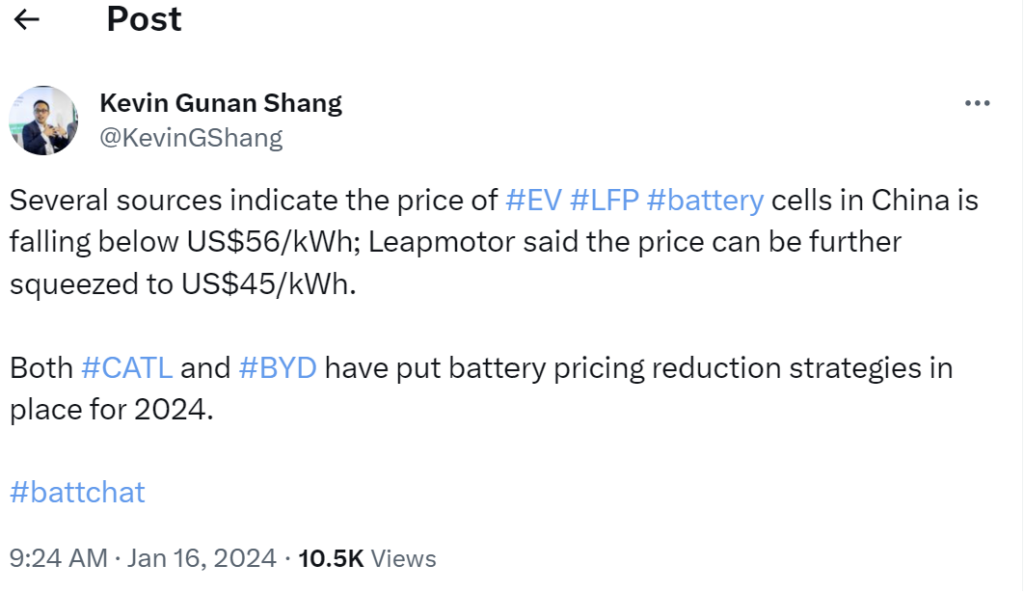
Battery cells falling below $56/kWh
Several sources indicate the price of EV #LFP battery cells in China is falling below US$56/kWh; Leapmotor said the price can be further squeezed to US$45/kWh. Both CATL and BYD have put battery pricing reduction strategies in place for 2024.
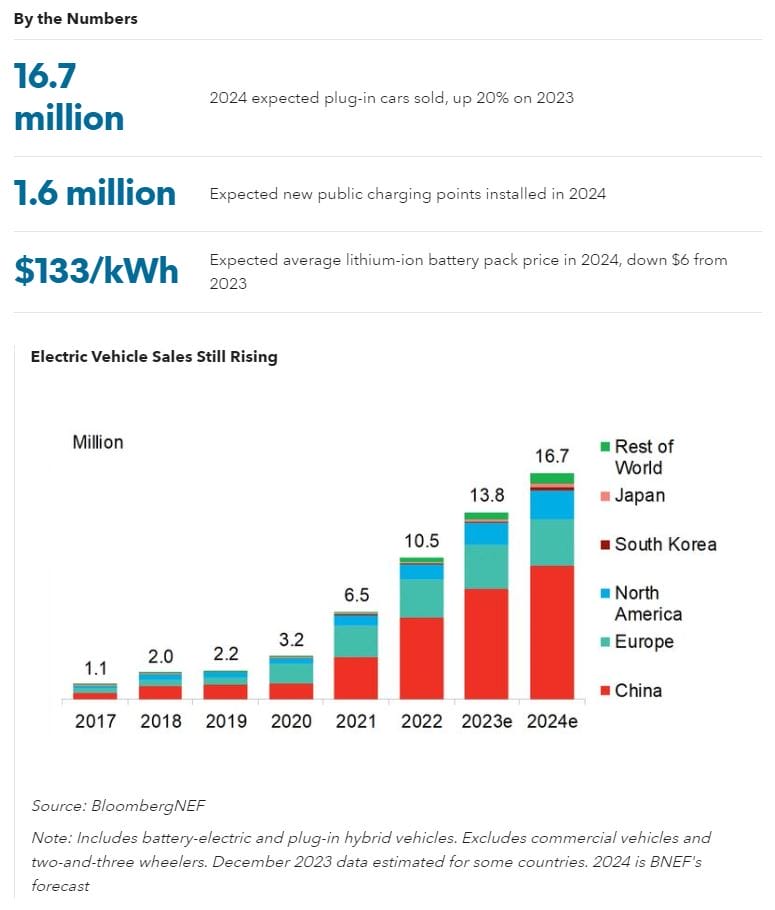
20% of new car sales this year will be electric
We expect 16.7 million passenger EVs to be sold and another million commercial EVs. Number of EVs on the road should reach 57 million by the end of the year. That is over 4% of the fleet.
We expect a record 1.6 million public EV charging connectors to be added in 2024, up from 1.2 million added in 2023.
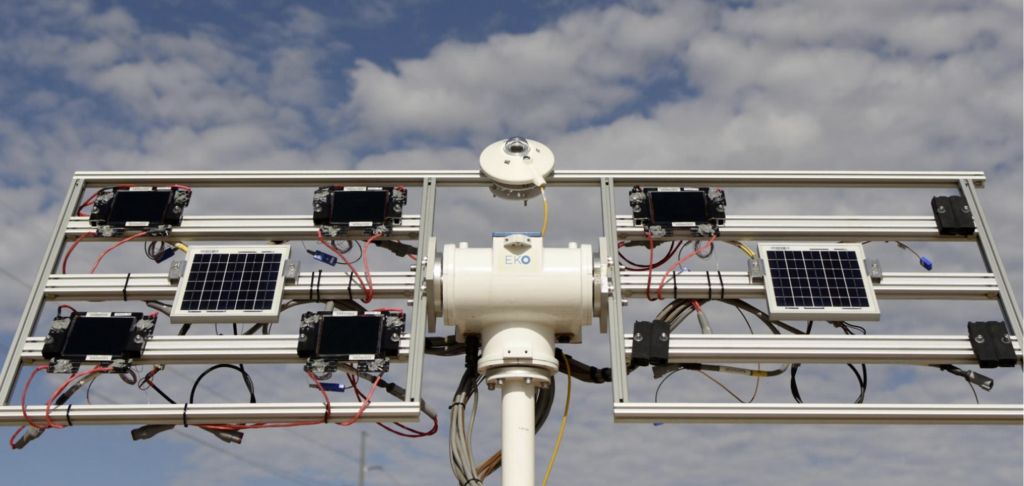
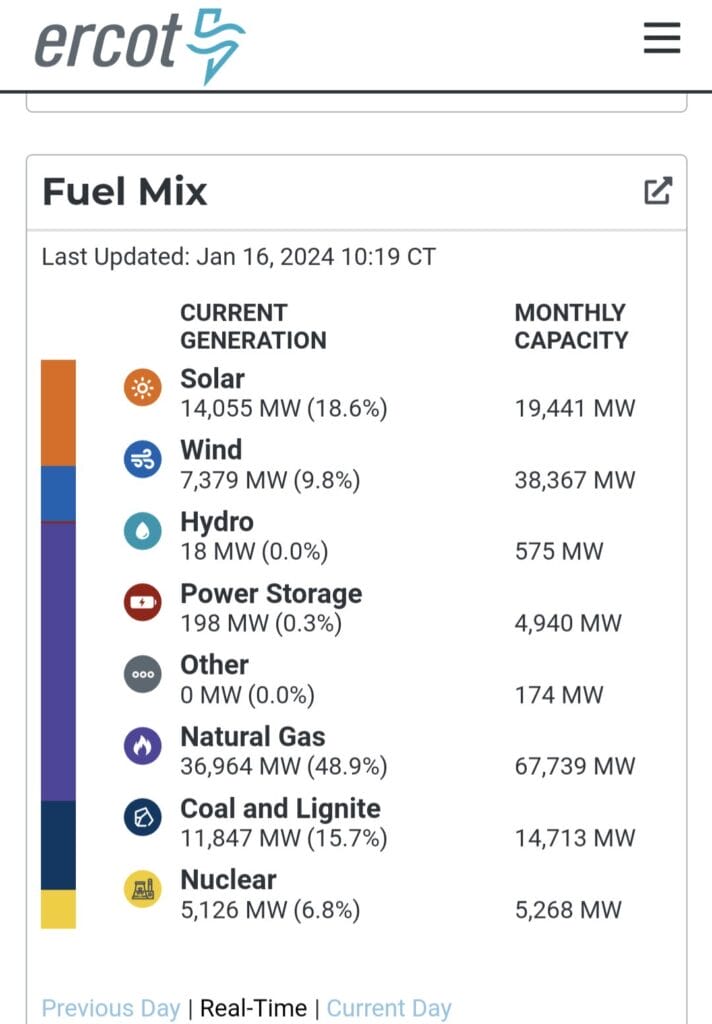
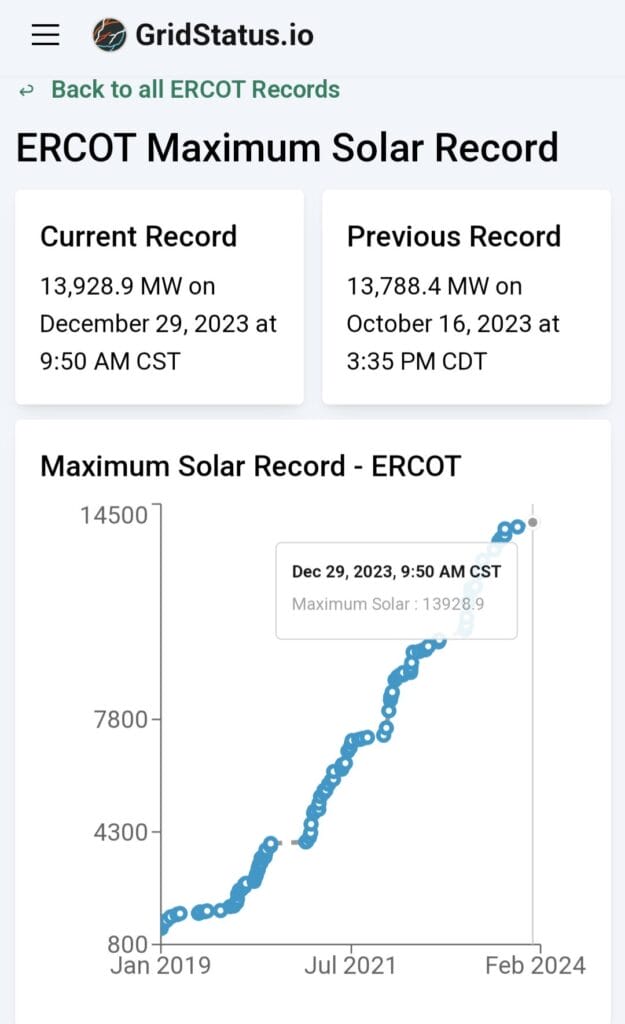
Texas setting solar record during winter
‘There’s a new solar record in Texas! Fitting it’s happening on this ultra cold, high demand day. We’re over 14,000 megawatts which is 3x the amount we had three years ago!’
TOPCon solar module production costs 16¢/W in China – EU, US, and India 18-75% higher
China can now produce tunnel oxide passivated contact (TOPCon) PV modules for between $0.160/W and $0.189/W. Costs in Europe, India and the United States, by contrast, could be as low as $0.243/W, $0.281/W, and $0.195/W, respectively.
Assumptions were based on the idea of module manufacturing at a 10 GW integrated PV factory.
Chinese manufacturers could currently produce heterojunction panels for between $0.173/W to $0.198/W. The price range for potential European module makers is indicated at between $0.250/W and $0.305/W. Indian and US producers, meanwhile, should achieve prices of $0.209/W and $0.290/W, respectively.
Tesla Solar Roof pricing – make sure to account for the new roof
‘A Solar Roof without batteries in Illinois had an estimated cost of $5.72 to $6.54 per watt depending on roof complexity. Another estimate from Texas ranged from $6.05 to $6.77 per watt.’
‘Roof size does significantly affect the overall cost of a system. A small roof (1,594 square feet) in Illinois could cost around $54,000 to $58,148 after the federal tax credit, Tesla estimates. That’s $3.78 to $4.05 per watt, much closer to the cost of solar panels, though still more expensive. (Tesla solar panels there would cost $2.54 per watt after the federal tax credit.)’

GM battery manufacturing town may ban all power plants
‘Lordstown Village Council is holding a public hearing at 5:30 p.m. to discuss legislation that includes prohibiting of new permits for wind energy systems, solar energy systems, and any “major electric facilities.”
Large wind and solar farms have been banned in all 18 townships of Columbiana County as of October.’
Tesla Powerwalls & Inverters failing
From analyst Roth MKM…
“he is seeing substantial failure rates…he said the TSLA inverter and the Powerwall+ are now both failing at a 10% rate vs. 4% for inverter only in Q4’23 and 10% for the Powerwall+. Despite that…he still plans on switching 60% of his 2024 resi inverter business to Tesla.”
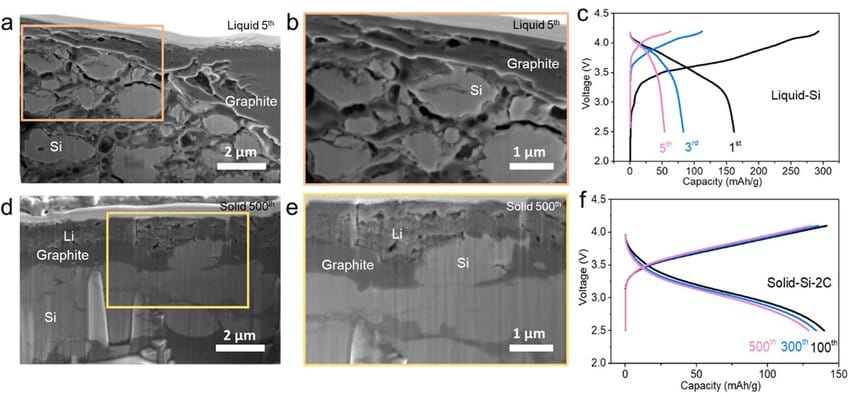
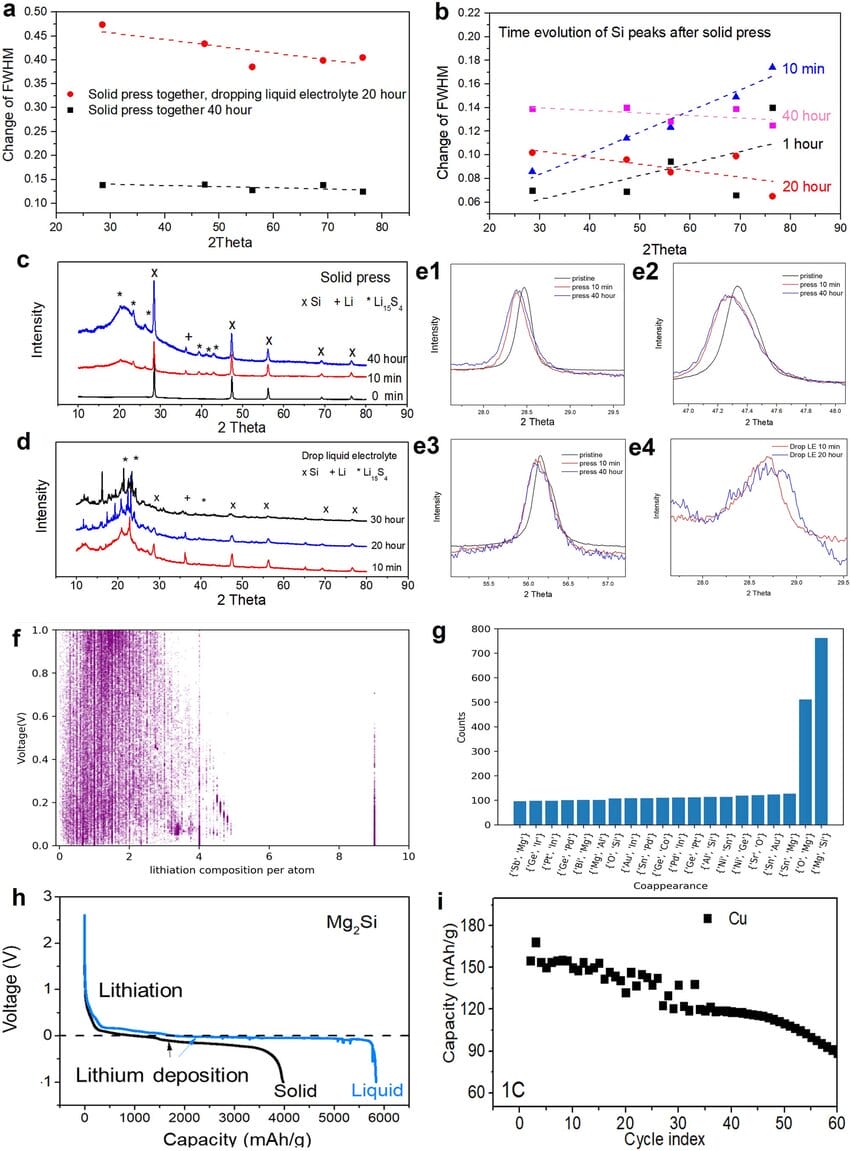
Solid state battery research – dendrite, and silicon density – fast charge and long life hopes
Li and his team stop dendrites from forming by using micron-sized silicon particles in the anode to constrict the lithiation reaction and facilitate homogeneous plating of a thick layer of lithium metal…”In our design, lithium metal gets wrapped around the silicon particle, like a hard chocolate shell around a hazelnut core in a chocolate truffle”…These coated particles create a homogenous surface across which the current density is evenly distributed, preventing the growth of dendrites. And, because plating and stripping can happen quickly on an even surface, the battery can recharge in only about 10 minutes…retained 80% of its capacity after 6,000 cycles.


Energy storage developer raises $225 million
NineDot said yesterday (10 January) that it has secured US$225 million in equity capital commitments from Manulife Investment Management, which led the round with a US$135 million commitment, and another global investment firm, Carlyle.
The money brings NineDot’s investment raised to date to more than US$400 million and will be used to advance its NYC pipeline. It could also go towards expanding the company’s reach into other geographies or making acquisitions.
NineDot is thought to be developing around 30 to 40 separate lithium-ion BESS sites around the city, each planned as 5MW output with 4-hour duration (20MWh).
Plastic based flow battery that emulates human body
“CMBlu fills its storage tanks with a solid polymer that holds a charge, and then transfers it to and from the liquid electrolyte, which is pumped into an electrode stack for charging and discharging cycles. Kaun likened that system to how the human body stores energy in fat, and then transfers that energy to blood sugar when it needs to be delivered to cells.”
‘”What we have here at CMBlu is a rechargeable polymer, a rechargeable plastic. We can make the plastic [and] recycle the plastic.”

53.5 GW of solar in 2024 – 65 in 2025
That’s going to be nearly $100 billion in solar installed this year, and more than $120 billion in 2025. 80% of this capacity will be utility scale facilities.
The new capacity turn on in 2024 will offset roughly 1.3% of all electricity demand in 2025, with all solar meeting 8.3% of national electricity demand.
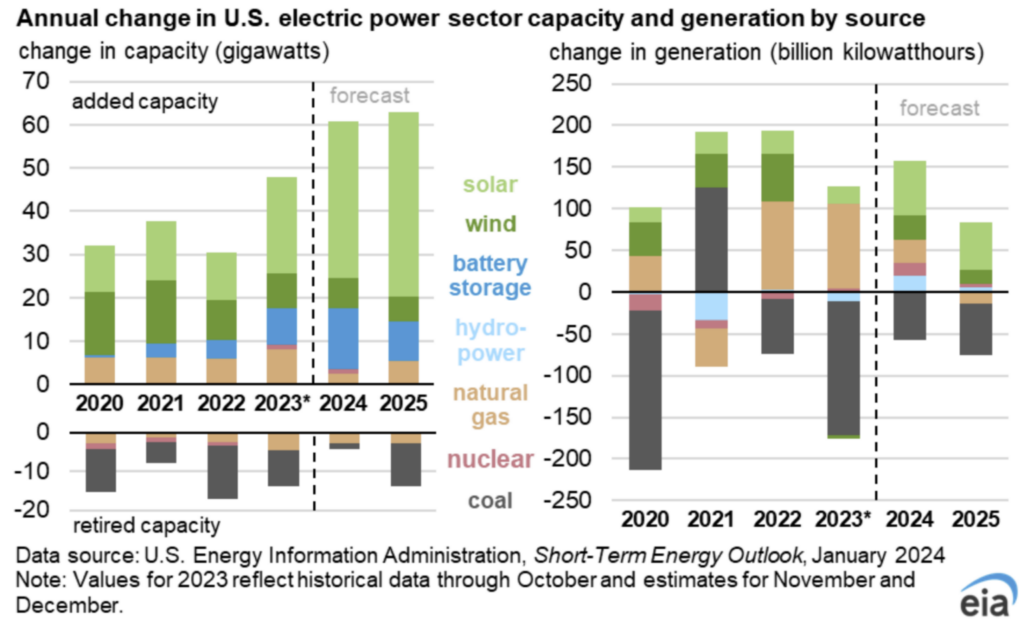
The 65 GW of capacity could cover 1.6% of all electricity demand, pushing solar to 9.9% of 2025 electricity. At this point wind and solar will be nearing a quarter of all electricity.
America’s kgreenhouse gas emissions down 1.9% in 2023, 0.5% in 2024, and 2.5% in 2025
The power industry drove emission declines, while both transportation and industry increase in 2023. Natural gas generation grew more than twice as fast as renewable generation did, year-on-year.
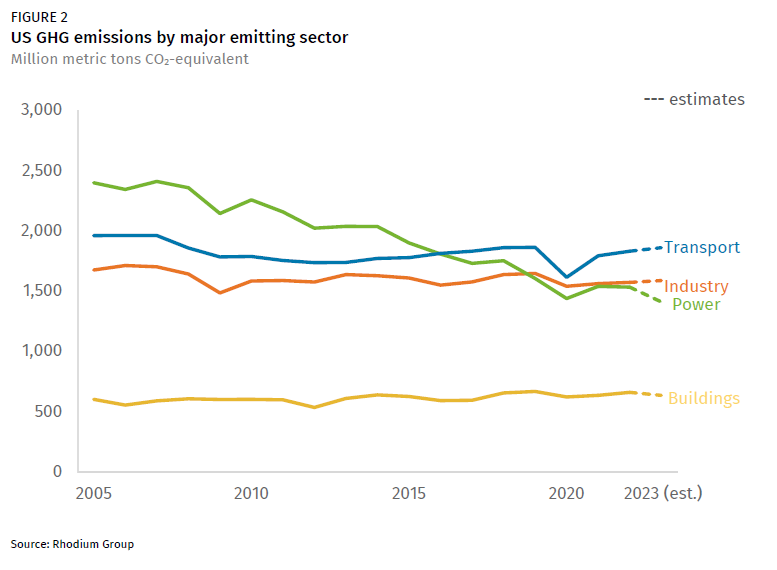
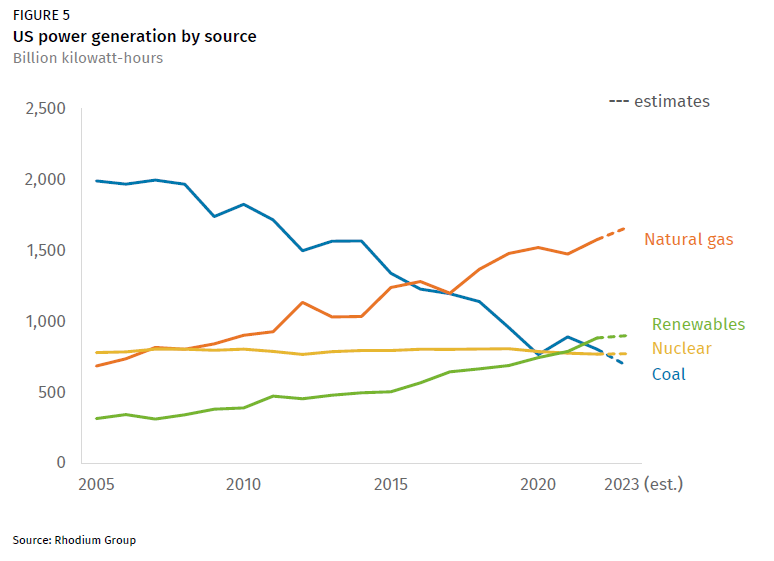
The EIA sees that in 2024 and 2025, power emissions may only fall by half a percent, increasing to 2.5% in 2025.
Sub zero heat pumps
‘The conditions for the prototypes are that they have to deliver 100 per cent heating capacity without the use of extra heating sources and high efficiencies at 5° fahrenheit (-15° celsius)…Bosch, Daikin, Midea, and Johnson Controls join Lennox International, Carrier, Trane Technologies, and Rheem in the next phase of the challenge…Bosch says it can keep operating in temperatures down to -15°C and still function at -25°C’
Hertz selling used Teslas
The card rental company is selling its used EVs as they reach the end of their second year of use, which I’d the company’s standard policy. Model 3 & Y units are seemingly available.
Pricing starts at just over $20,000 with the cars eligible for a $4,000 used EV tax credit.

The price of home charging an electric vehicle in the U.S., on average, is equivalent to $1.41 per gallon.
Map shows how cheap gasoline would have to be in order to be on par with the cost of at-home EV charging. In most parts of the country, charging an EV is equivalent to a gasoline price of $1 to $2 per gallon.
Massachusetts is $2.32/gallon to break even with its more expensive electricity – while Hawaii is the highest at $3.59/gallon. Louisiana & Washington have the cheapest electricity driving the comparable cost to $0.98/gallon.
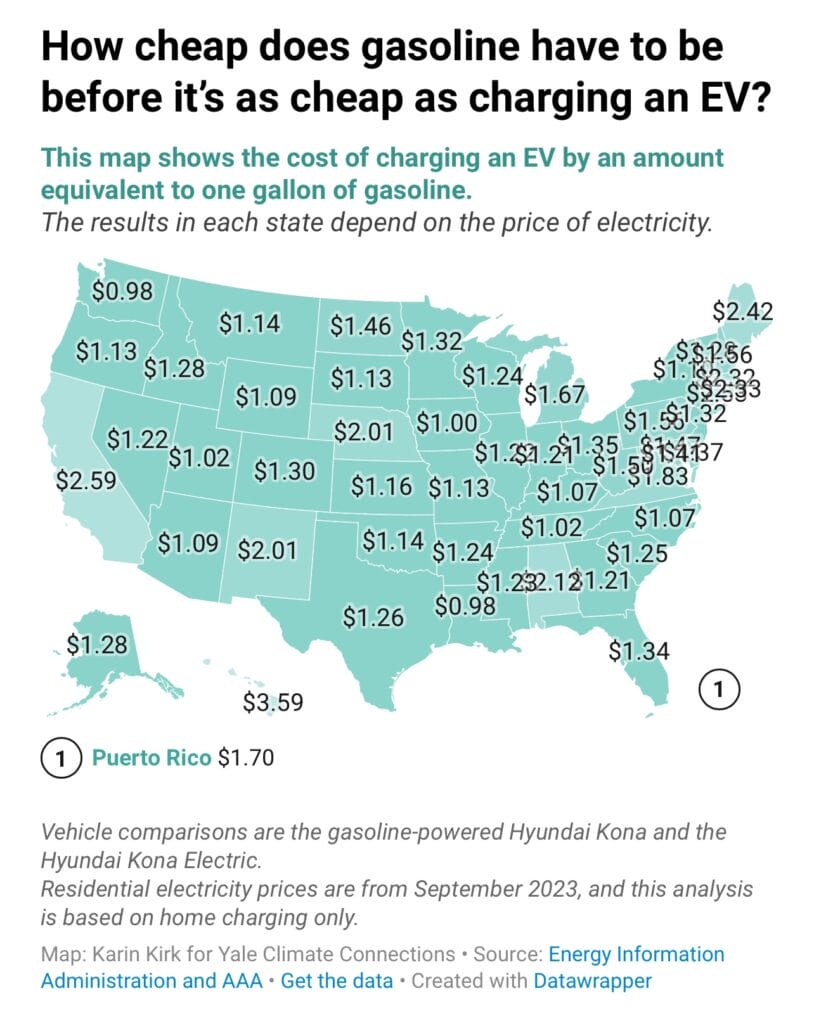
These comparisons were made by calculating a “gallon-equivalent” for electric vehicles. This number is based on three factors: The average kilowatt hour per mile to drive an EV, the average miles per gallon for a comparable gasoline-powered vehicle, and the price of electricity. Multiplying these three numbers together yields the cost of driving an EV the same distance as a traditional car would travel on one gallon of gasoline.
Solar farms offer food availability and nesting sites for birds, contributing to avian diversity
‘According to the research group, bird species richness, diversity, and invertebrate-eater species richness and abundance were higher in the solar parks than in the control plots. Among the reasons provided by the research group is the food availability for insectivorous birds, as the PV panels attract various species of water-seeking aquatic insects.’
Overall, the academic group spotted 353 individuals of 41 species in the solar parks and 271 individuals of 40 species in the control plots. Black redstart, European stonechat, white wagtail, and Eurasian tree sparrow were identified as species most strongly associated with solar parks.’
Rough black silicon optimal for solar cells
‘Black silicon is made when the surface of regular silicon is etched to produce tiny nanoscale pits on the surface. These pits change the color of the silicon from gray to black and, critically, trap more light, an essential feature of efficient solar cells…As flourine gas etches away at the silicon unevenly, pits are created on the surface of the silicon. The rougher the surface, the more light it can absorb, making rough black silicon ideal for solar cells’
China’s rooftops fed its solar boom, but challenges arise
‘Three cities and counties announced in recent days that local power infrastructure can’t currently absorb more distributed solar generation…adds to about 150 locations nationwide that have also reached their limit’
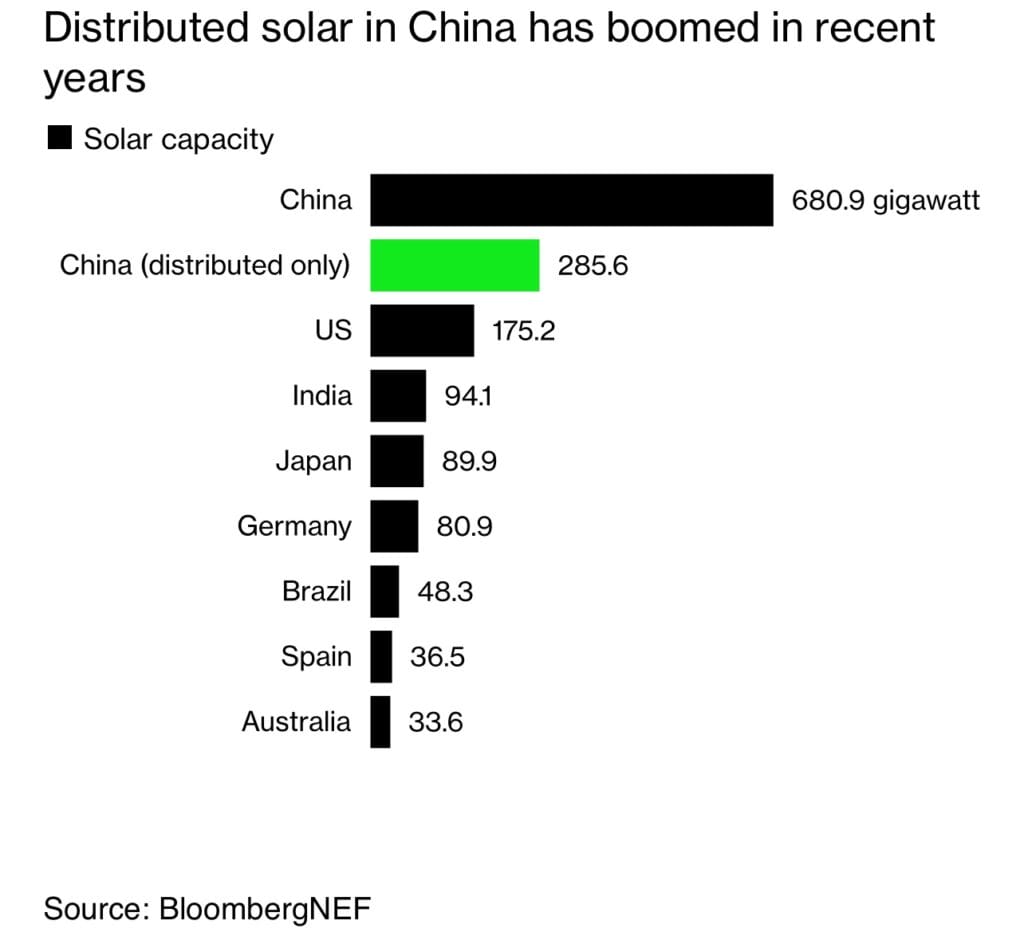
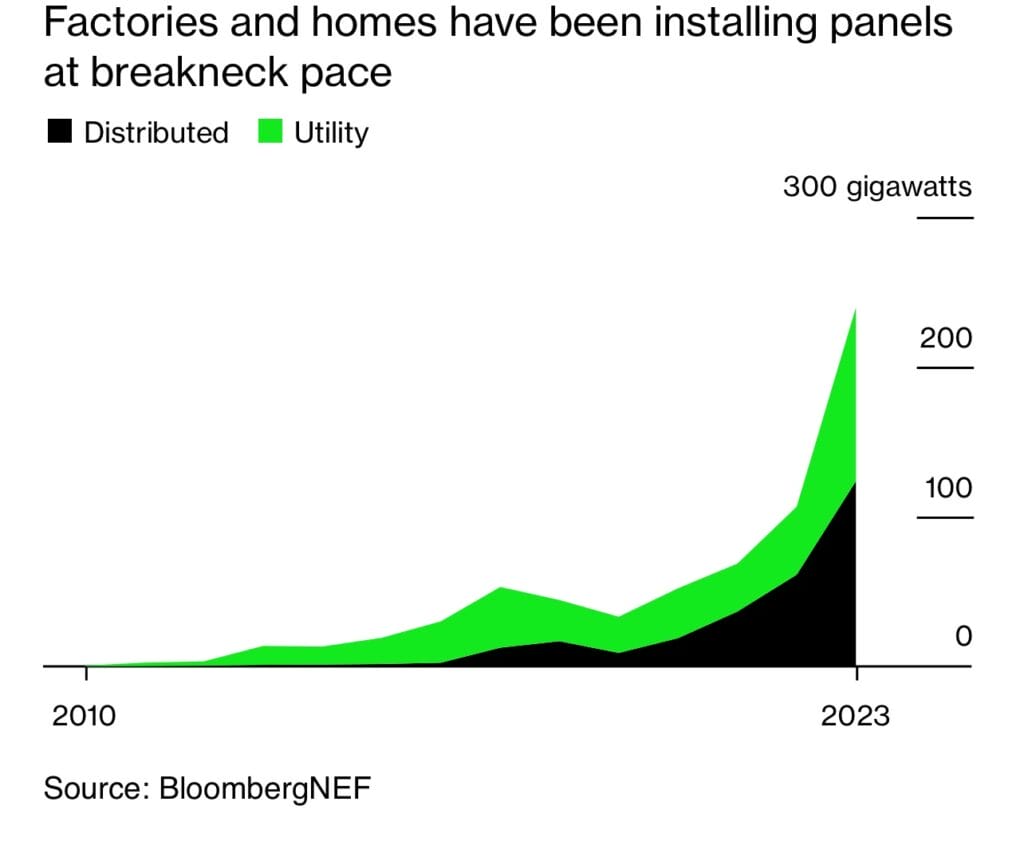
China’s rooftops have more solar than entire countries.
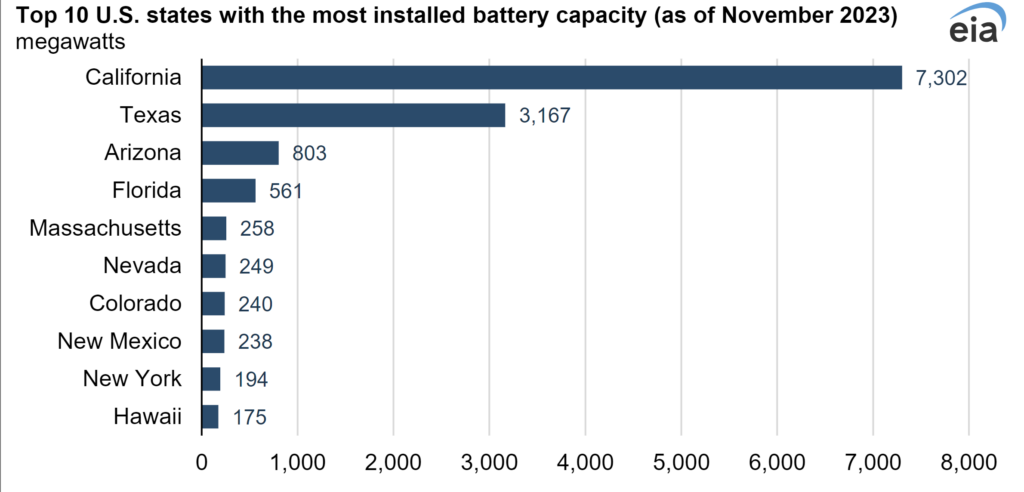
Government expect batteries deployed in the US to double in 2024
U.S. battery storage capacity could increase by 89% by the end of 2024 if developers bring all of the energy storage systems they have planned…Developers currently plan to expand U.S. battery capacity to more than 30 gigawatts (GW) by the end of 2024, a capacity that would exceed those of petroleum liquids, geothermal, wood and wood waste, or landfill gas…California has the most installed battery storage capacity of any state, with 7.3 GW, followed by Texas with 3.2 GW.
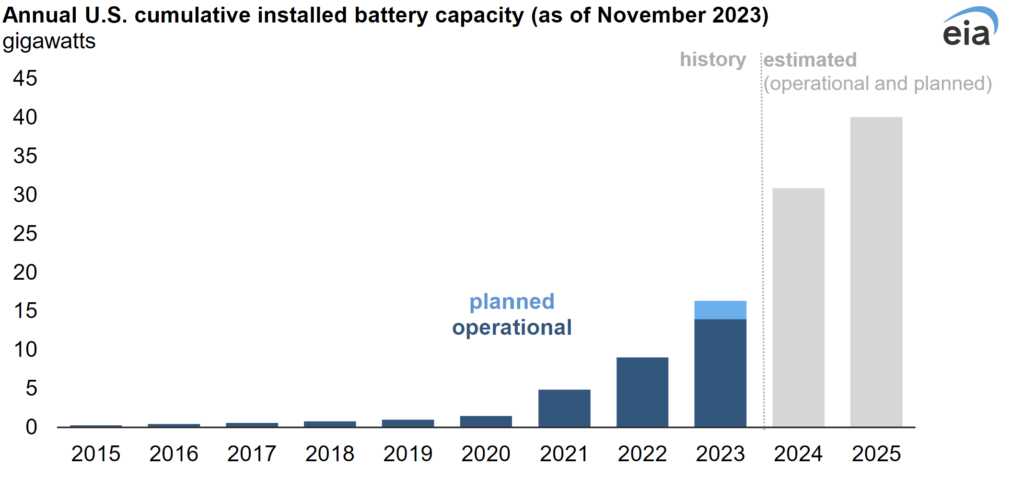
Planned and currently operational U.S. utility-scale battery capacity totaled around 16 GW at the end of 2023. Developers plan to add another 15 GW in 2024 and around 9 GW in 2025.
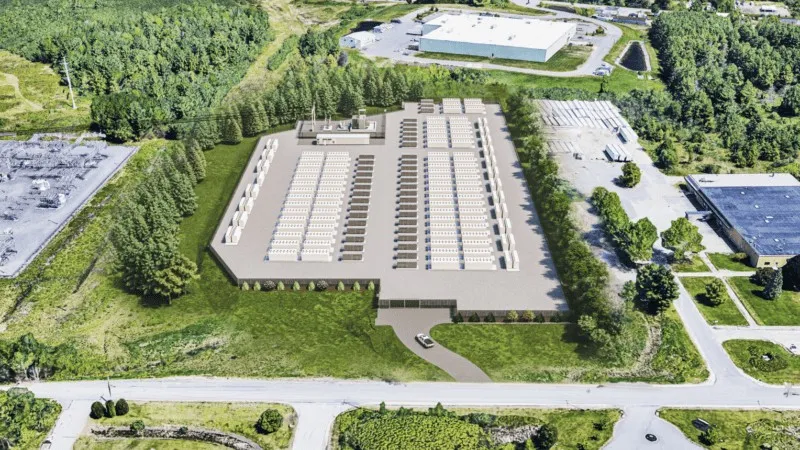
Maine getting first large utility scale battery
‘Plus Power plans to start work this spring on Maine’s largest battery storage project at the Gorham Industrial Park. Cross Town Energy Storage will be rated at 175 megawatts/350 megawatt hours and provide the region’s grid operators with instant power when needed…The $100 million-plus project will feature 156 tractor-trailer-like containers spread across five acres in the Gorham Industrial Park, stuffed with lithium iron phosphate batteries…Plus Power is using battery systems supplied by Sungrow, a Chinese global clean energy company. There will be 3,072 battery cells in each 30-foot long container…Maine currently has 63 megawatts of grid-connectedenergy storage at six locations.
Burnt DC combiner box connections on a solar plant
In a solid argument for keeping up with your operations and maintenance work, here’s a site we visited today.
DC combiner boxes filled with leaves, along with loose connections due to years of small shifts, led to connections being burnt.


The solar panels are wired in a series that end at the combiner box, which connects multiple strings of solar panels in parallel. The combined wire of the in panels, now much larger, then goes to the inverters where it is converted from direct current into alternating current.
US Government: Significant solar increase over next two years
The U.S. Energy Information Administration (EIA) expects solar electric generation will account for 7% of total U.S. electricity generation in 2025, up from 4% in 2023, according to its January Short-Term Energy Outlook (STEO). Developers have reported that almost 80 gigawatts of solar power will come online over the next two years, increasing U.S. solar generating capacity by 84% and making solar the leading source of growth in U.S. electricity generation through 2025.
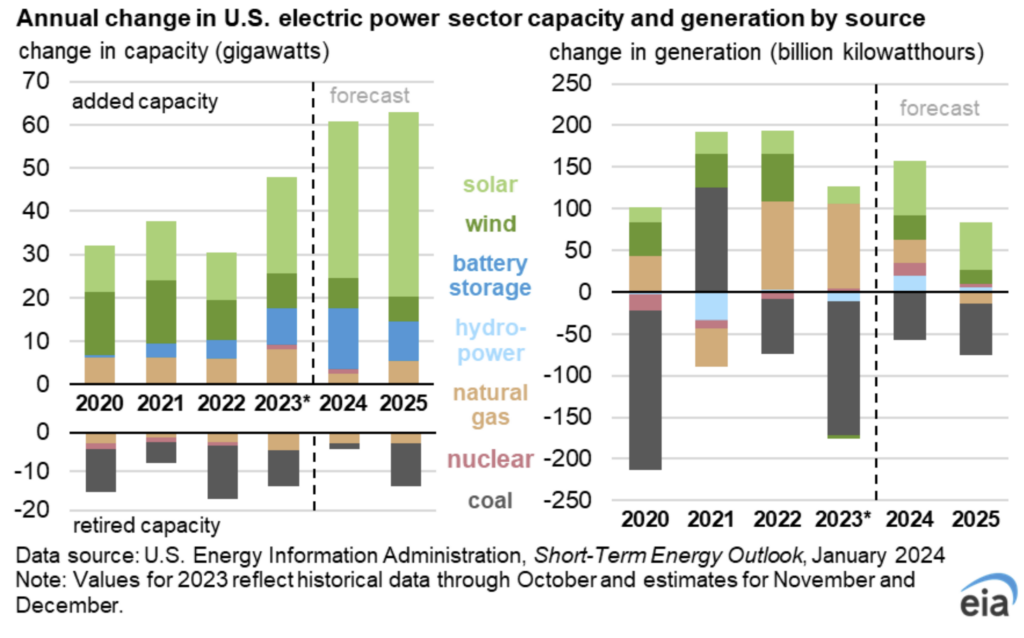
“We are experiencing a significant shift in U.S. electric generation, as solar generation grows rapidly, taking market share from coal and tempering the growth in natural gas usage,” said EIA Administrator Joe DeCarolis. “Coal and natural gas remain important to the U.S. electric grid, even as variable renewable resources such as solar and wind grow.”
World’s largest solar, wind, and energy storage power plant
‘$7.7 Billion Renewables Mega-Project… 6 gigawatts of wind and solar capacity and 3.4 gigawatt-hours of energy storage…connected to the grid by the end of 2025…power to Beijing and its surrounding areas via the Datong-Tianjin ultra-high voltage power line’
Just unionized solar installers & technicians furloughed for a year
“EmPower Solar, in Bethpage, NY…unionized over concerns about poor working conditions and issues they faced on the job…on 22 December, workers at Empower voted to join UAW Local 259…on 30 December, EmPower furloughed 21 workers until 2025…company says “solely due to a slowdown in business”…UAW Local 259 claimed this amounted to a “union busting” tactic”
The UAW railed against EmPower on Saturday.


Renewables, batteries, and EVs as China’s economic-security-social strategy
“export value of electric cars, batteries and solar panels grew 42% on-year in the first three quarters of 2023…Domestic sales of those products are even larger than exports, fueled by subsidies for solar installation and EV purchases”
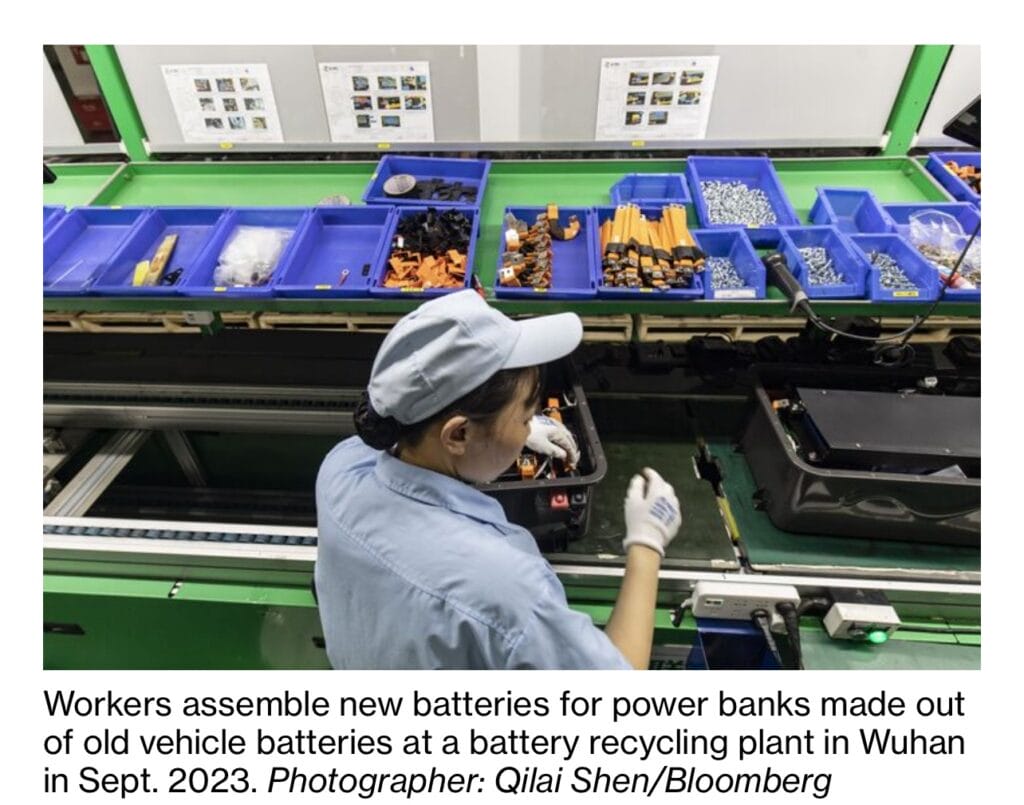
“Part of that focus is what they call the “new three” growth drivers of electric vehicles, batteries and renewable energy, aiding the world’s de-carbonization push and fueling demand for commodities such as copper and lithium.”
“manufacturing focus is driven by a mix of economic, security and social stability objectives”
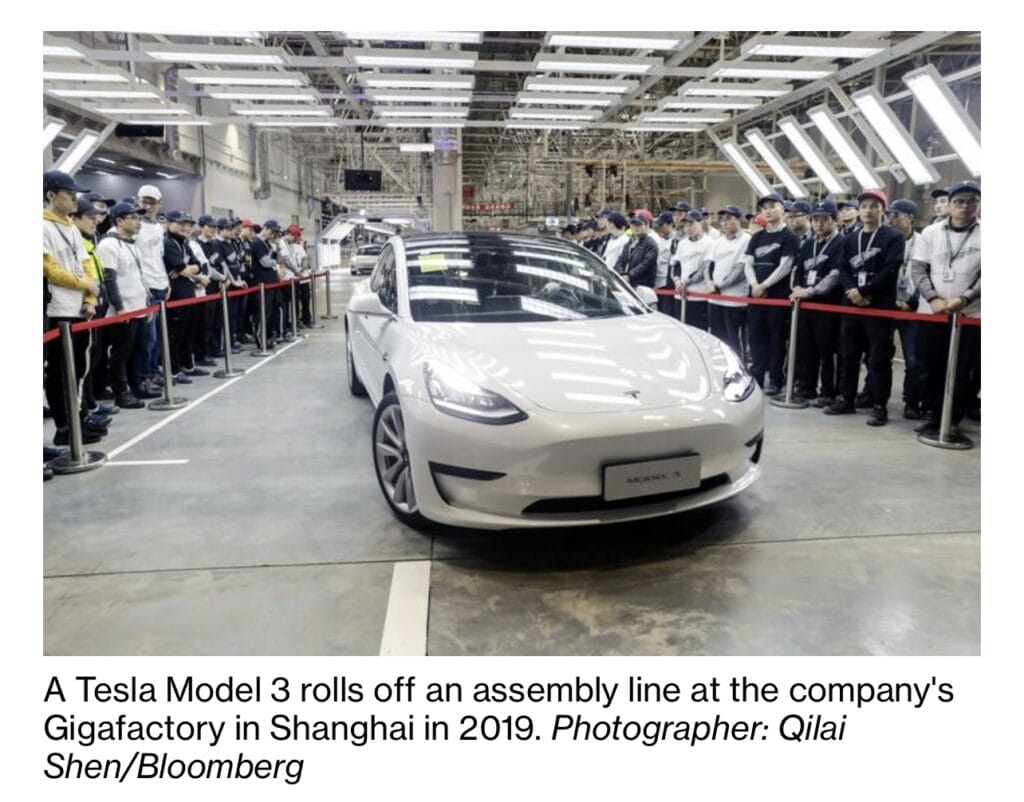
“every 100 new manufacturing jobs are associated with 27 new non-manufacturing jobs; by contrast, every 100 new service jobs are associated with only 3 additional manufacturing jobs”
Lithium energy storage up 100%+ in 2022 & 2023 – 2024 outlook
‘It is anticipated that the installation of large-scale energy storage could reach 53GW/128.6GWh globally in 2024…United States could reach 11.6GW/38.2GWh…China – 24.8GW/55GWh’
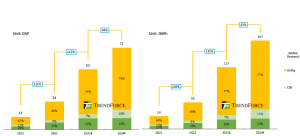
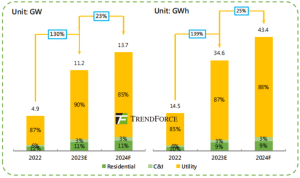
‘Total combined output of power and energy storage batteries in China reached 698.7GWh, marking a 41.6% year-on-year increase. In December, the average price of Chinese energy storage batteries dropped to 0.45 yuan/Wh ($0.063/Wh), experiencing a monthly decline of around 4%.’

For each $1,000/shipping container of 250 kWdc of solar modules – $0.004/Wdc
“Container shipping rates skyrocket 173%…Carriers diverted +$200 billion in trade from the Red Sea due to Houthi militant threats. Sipping a 40-foot container from Asia to northern Europe now costs over $4,000, up +173%.”

APA Solar Holiday Swag
Thank you APA Solar for the high quality mugs, we’ll keep those in the apartment and make good use of them.


Electric buses at Steamboat Authority in Massachusetts
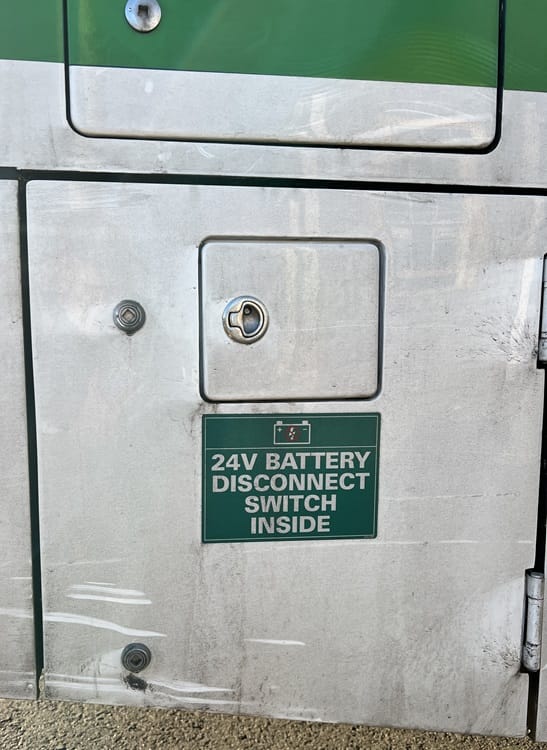
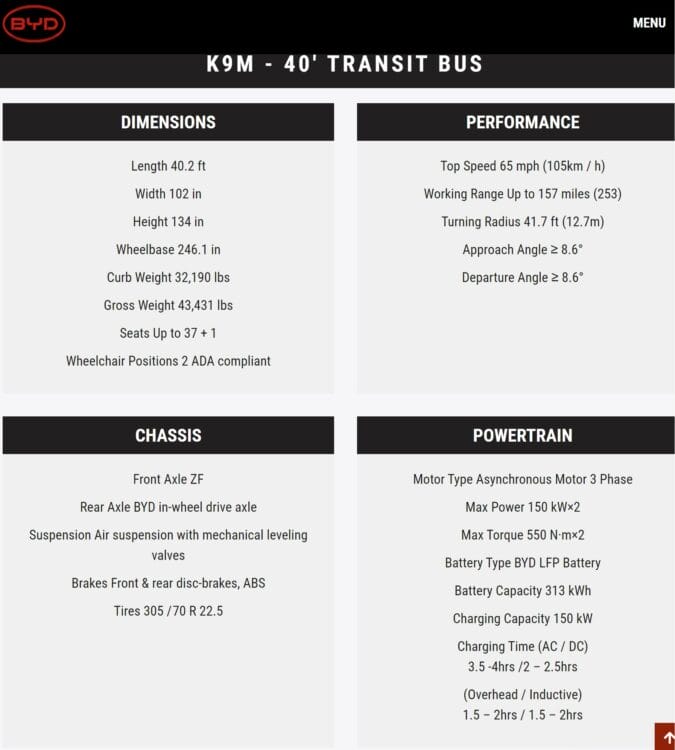
Was riding the ferry to Martha’s Vineyard to visit the lady’s family, and mentioned how quiet and electric sounding the buses sounded going from the Palmer Parking lot to the boats. On the way back from the island, saw that the units were in fact BYD, chosen in 2021 and deployed in September of this year!
‘40.2-foot K9M bus has a seating capacity of up to 37 passengers…top speed 65 MPH…range 157 miles…charging 2 to 2.5 hours’


$0 electricity bill in June
Visited a commercial customer of our on Wednesday to work through some operations and maintenance work. Got a chance to view the electricity bill that one of the five solar power installations we’ve done for them looks like.
It looks great for a behind the meter project!

Same has some serious cool/old switchgear that we’ve integrated Solyndra and other solar hardware into it. Plus really nice to walk into his office place and see the solar power systems we’ve built for him (and whose key information we supplied in both hard and soft copies) on the shelves.


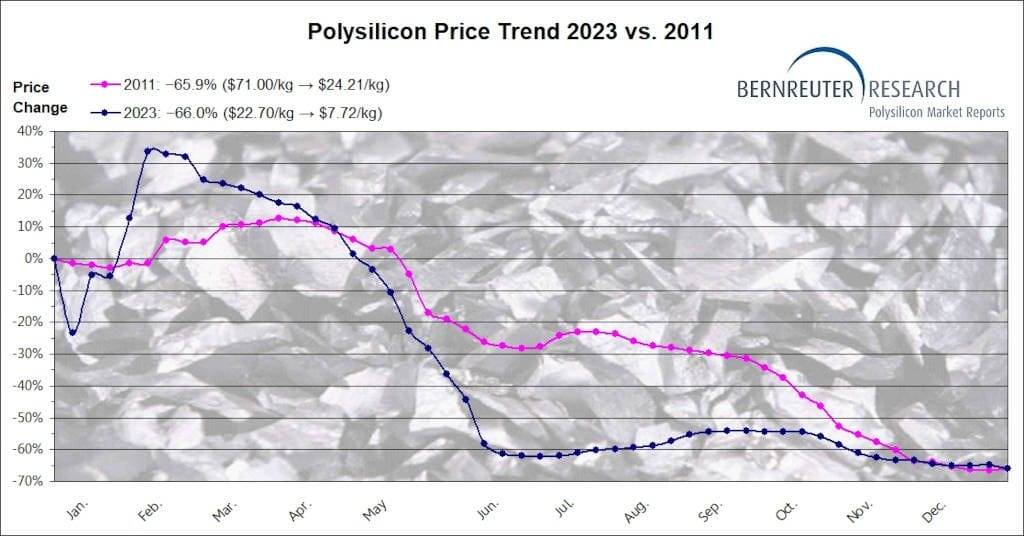
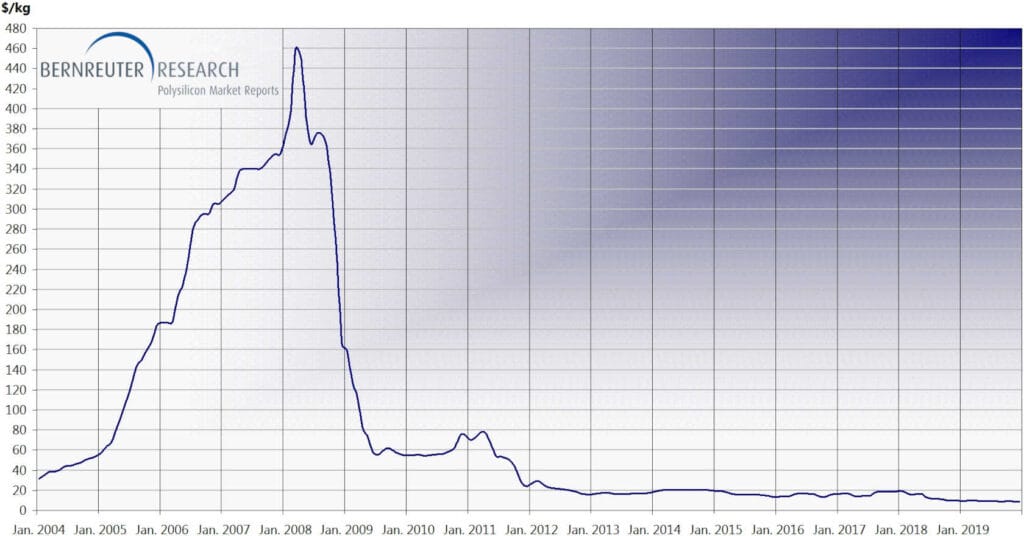
Solar polysilicon pricing down, much like in 2011
If we’re in for a batch of history repeating itself, then we’ve got a decade of cheap solar polysilicon coming for us. The first image below is from Bernreuter Research and it shows the pattern of polysilicon prices movements in 2011 vs 2023. The second image shows polysilicon pricing from 2004, to 2011, and then from that price drop through 2020+.
One reason we *might* have the same ongoing pricing trends (i.e. cheap poly) is that China is massively expanding capacity. While demand is growing, it seems capacity is leading.
Polysilicon Price Trend 2023 vs 2011
Polysilicon Price, Historical 2004-2020
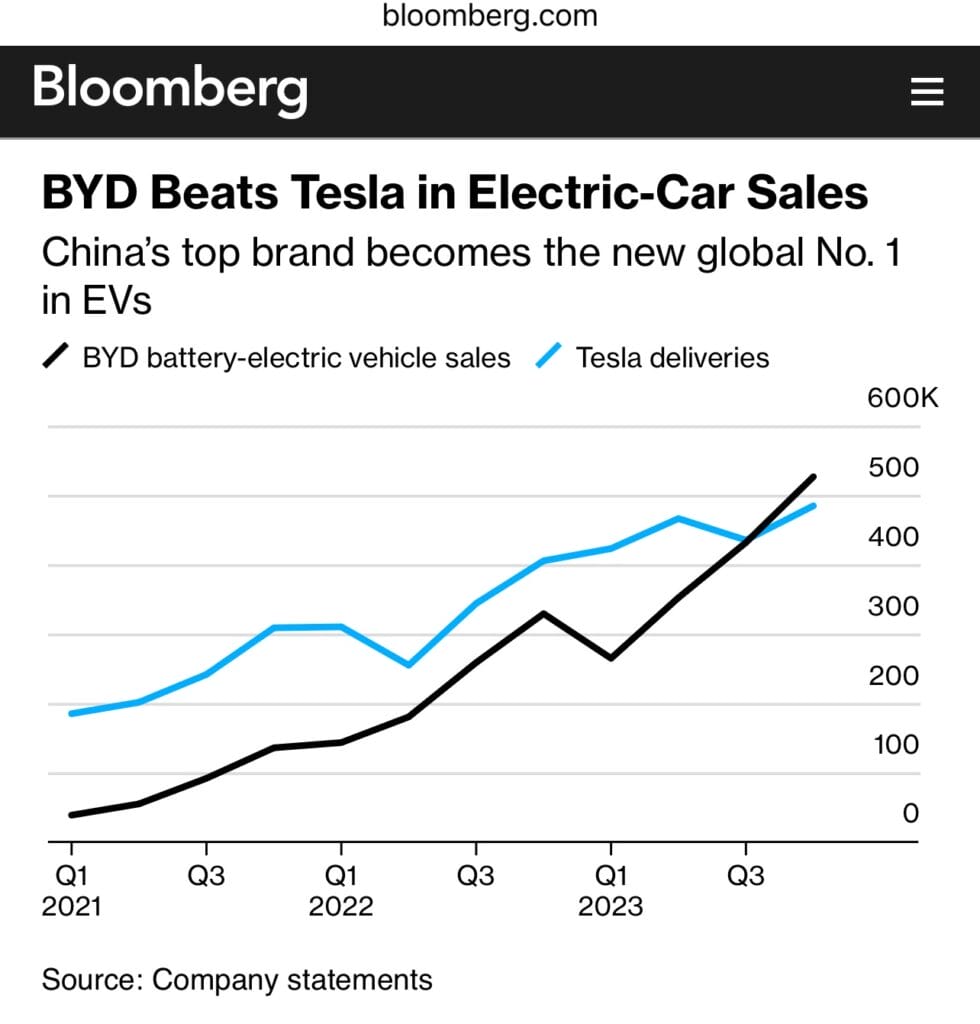
BYD world’s #1 EV sales company Q4’23, Tesla #1 revenue & profits
For Q4’23, BYD passed Tesla for total electric vehicles sold – 526,409 to 484,507. This is credited to BYD deeper roster of models offered at lower price points.
Tesla does lead in total revenue and profits (much like Apple leads Android products in profits while being outsold heavily).
‘BYD doesn’t sell in the US, where its vehicles would face a 27.5% import tariff.’
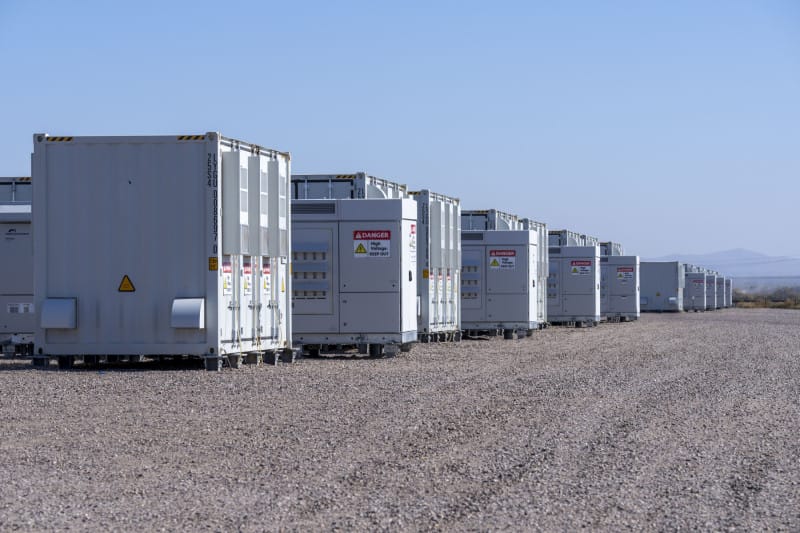
Retrofitting solar power plants with energy storage
NextEra has retrofitted the 100 MWac/135 MWdc Saint Solar farm with a 100 MW/400 MWh battery energy storage system in Coolidge, Pinal County, Arizona. NextEra has regularly said they see retrofitting their existing fleet of solar assets with energy storage as one of their greatest revenue generating opportunities. It’s been suggested that it’s going to be challenging to retrofit existing solar power plants with energy storage for a few reasons, however, there are a few companies that think long and far enough – as well have the skills and funding to prepare for these current times. There will be ample opportunity to build out our near 100 GW of existing utility scale solar power with energy storage.
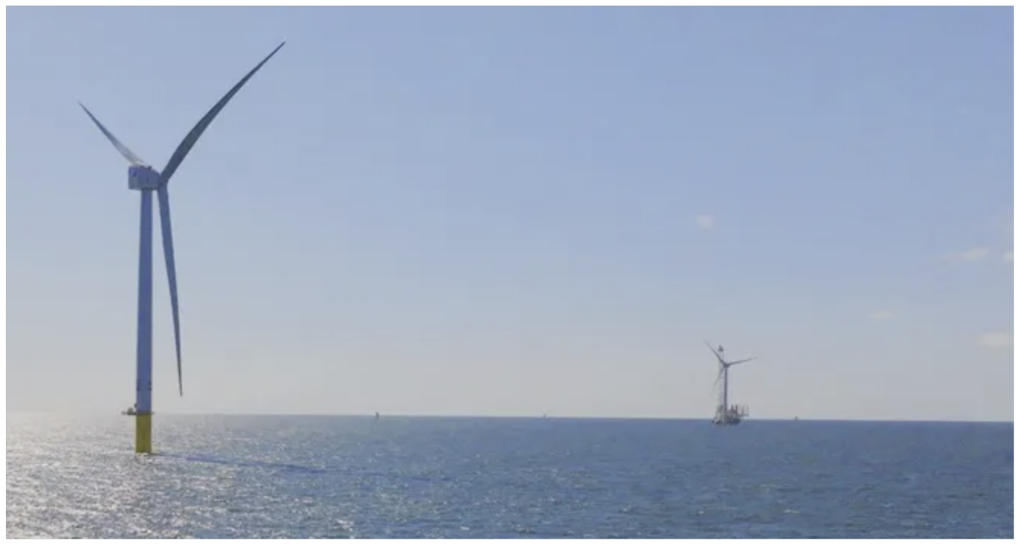
Massachusetts wind farm to start delivering within days
Vineyard Wind will begin to deliver “65 megawatts worth” of wind turbines, via five units, to the power grid before the end of 2023, per the Cape Cod Times. The value will increase toward the facilities full 806-megawatt capacity through 2024, when the plant is expected to be fully operational. We think the 65 MW value is actually wrong, as the article states five units will come online – at 13 MW each. The site’s units were changed to 14 MW units recently, suggesting 70 MW of capacity will be deployed and start delivering.
It’ll be quite interesting to see how the plant works in winter times where capacity factors can be extremely high off of the coast, especially high with these 107 meter long turbine blades.
$11 billion power line and wind project
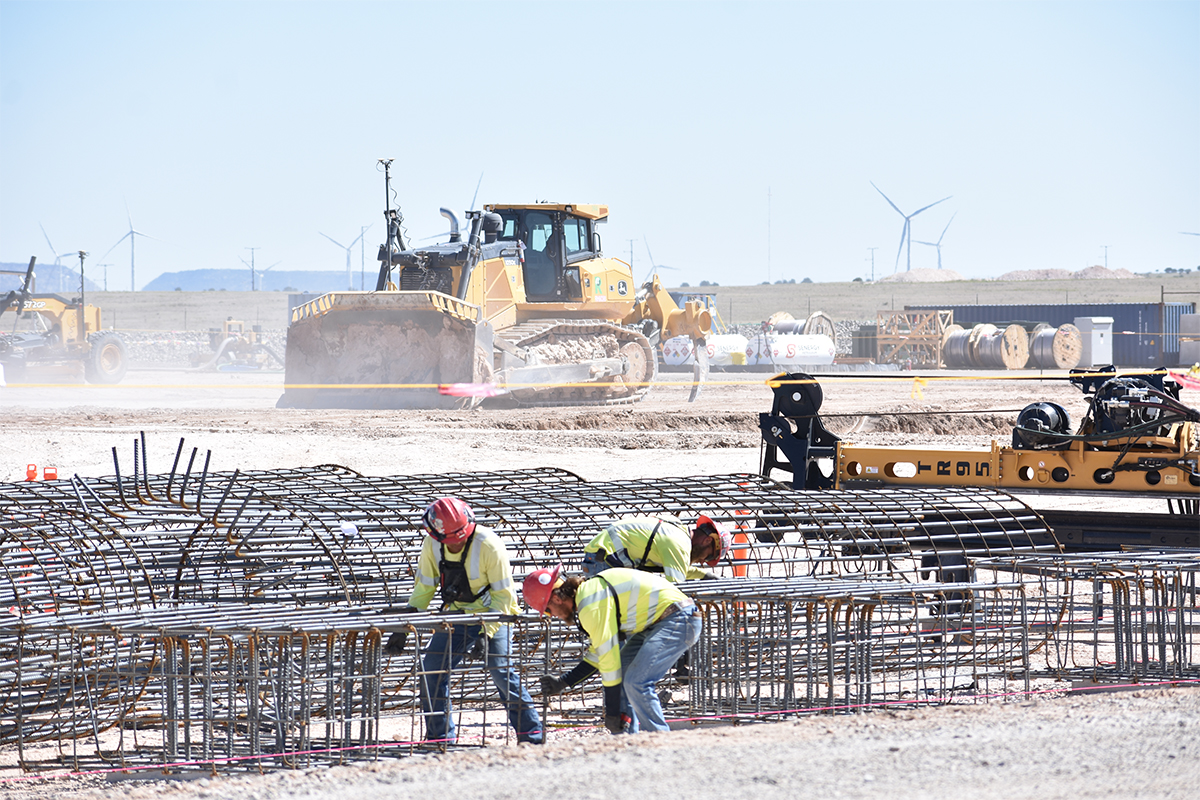
Pattern Energy has closed on $11 billion in finance to construct one of the largest wind and transmission projects in the nation. SunZia Transmission is a 550-mile ±525 kV HVDC transmission line between central New Mexico and south-central Arizona with the capacity to deliver clean power generated by Pattern Energy’s 3,515 MW SunZia Wind facility. The power generation facility is being constructed across Torrance, Lincoln, and San Miguel Counties in New Mexico. The deal includes an integrated construction loan & letter of credit facility, two separate term facilities, an operating phase letter of credit facility, an innovative tax equity term loan facility and a holding company loan facility.
A $100 trillion opportunity
Wrote a story for pv magazine USA. It’s about the future, and potential, and widening the “Solar Overton Window”. Building out the world’s solar capacity – along with energy storage – will create a $100 trillion opportunity if some of the more aggressive ideas currently spoken of are fulfilled. Jigar Shah says, “This is the largest wealth creation opportunity of our lifetimes. There will be nothing else that will produce more wealth, more jobs, more work.”
Stay persistent, stay focused, be aggressive, go big over time – that’s our goal.


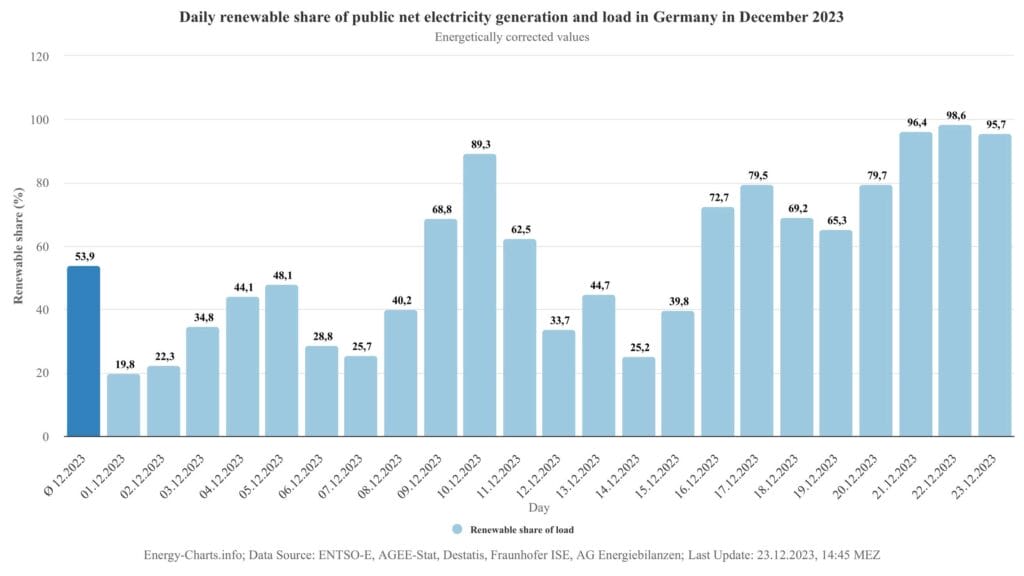
95% of electricity renewable in Germany
For the last three days, due to a winter storm driving heavy wind, greater than 95% of all electricity is being generated by renewable sources.
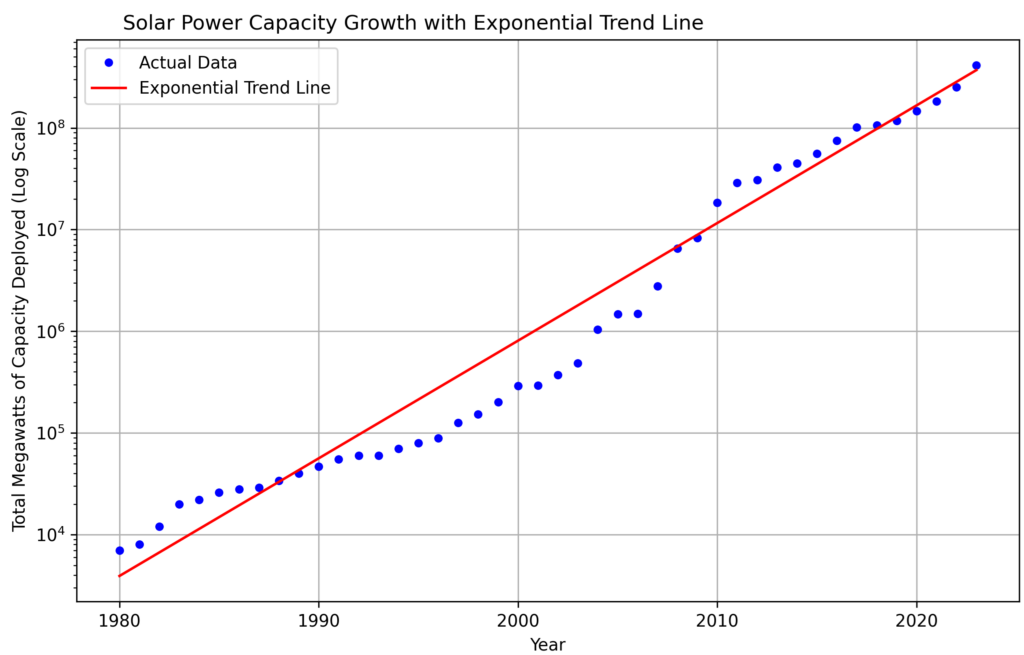
Exponential Solar
Cumulatively, since 1980, solar power has grown exponentially. There has been some times lesser, and some times greater than – but as seen below, the last few years of massive growth has brought us back in line with the trend line.
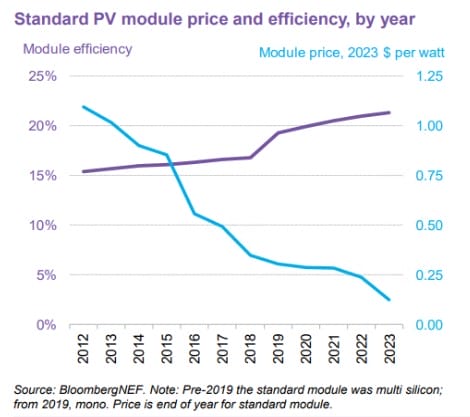
Efficiency vs cost, solar modules
From Jenny Chase of Bloomberg:
Pretty cool chart from my team at BloombergNEF. In 2012, the standard solar module was multicrystalline silicon, 15.4% efficient and costing $1.09/W in 2023 $. In 2023, standard is mono PERC, efficiency 21.3%, price $0.13/W.
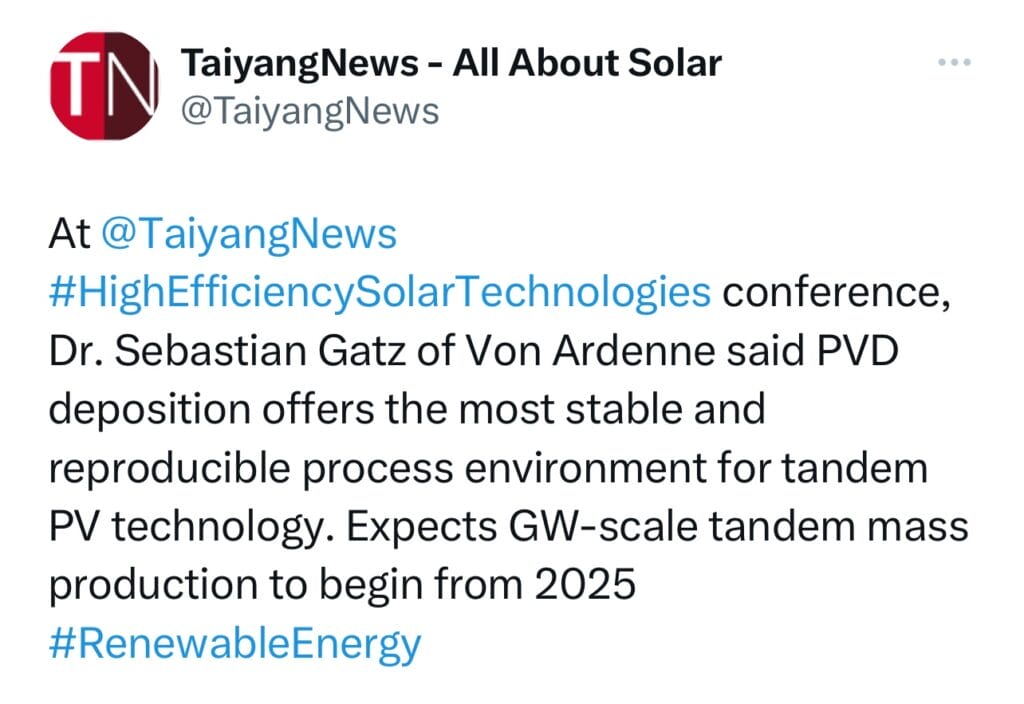
Perovskites scaling in 2025
Tandem (perovskite+silicon) solar cell manufacturing expected to scale in 2025.
Saw a post recently suggesting 32% efficiency cells would be getting manufactured in 2026. Some folks will get surprised by this, some won’t. Manufacturing lines better get ready.
Eight hour lithium batteries
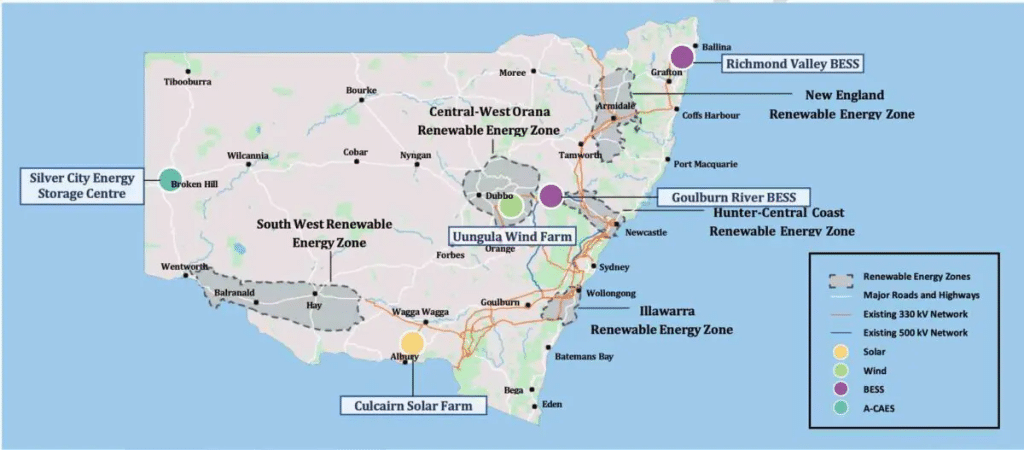
Lithium at eight hour capacities.
‘Ark Energy’s 275 MW/2,200 MWh…lithium-iron phosphate…one of five projects in recent NSW, AU tender…750 MW generation & 524 MW/4,192 MWh of storage…$4.2 billion (USD 2.84 billion) in private sector investment’
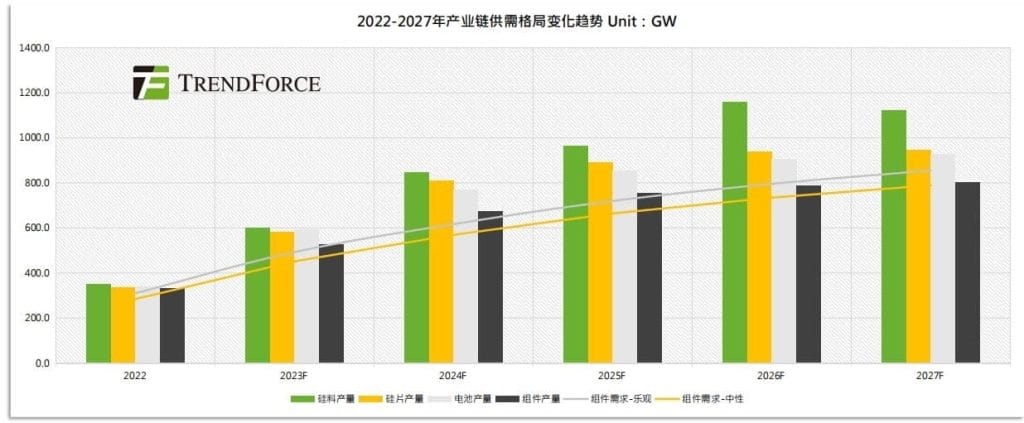
Solar Capacity – Trendforce Fall 2023
Trendforce anticipates that global module demand in 2024 will fall within the range of 570-620 GW demonstrating a growth rate of approximately 25%.
Module demand ≠ to solar installations we learned in Europe in 2022-23 as the continent stashed 50-100 GW of module capacity, but it tracks.
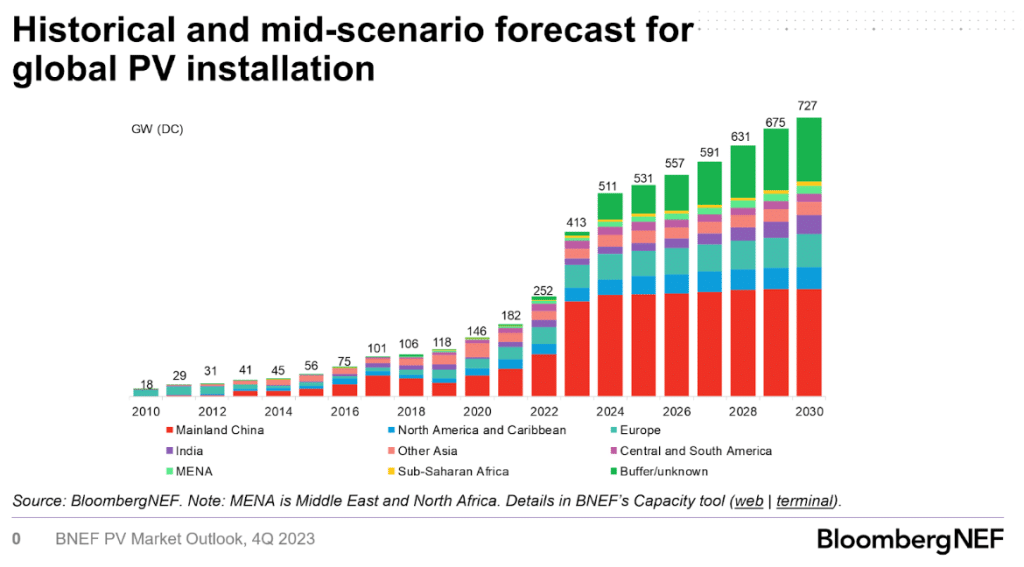
Solar Capacity – Bloomberg Fall 2023
2024 Solar Capacity Installation Projection: BloombergNEF, Fall 2023: 511 GW
Goose expert Jenny Chase absolutely believes that solar could install a terawatt of capacity – if interconnection and politics get out of solar’s way. That’s not reality though, and thus 23.7% growth projected. Which is a smashing number!
Solar Capacity Projections
2024 Solar Capacity Installation Projections
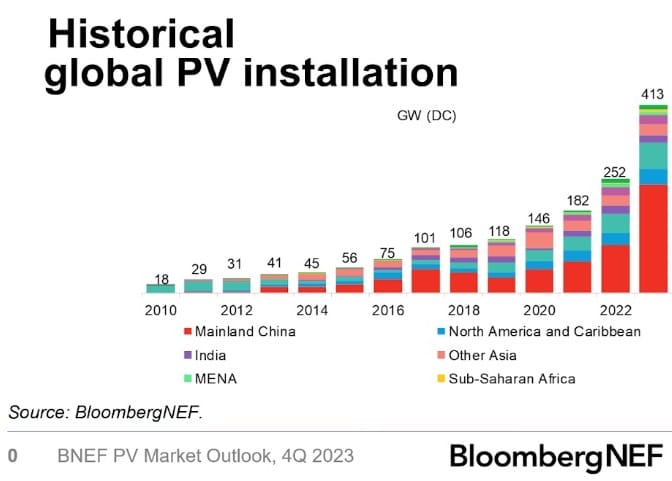
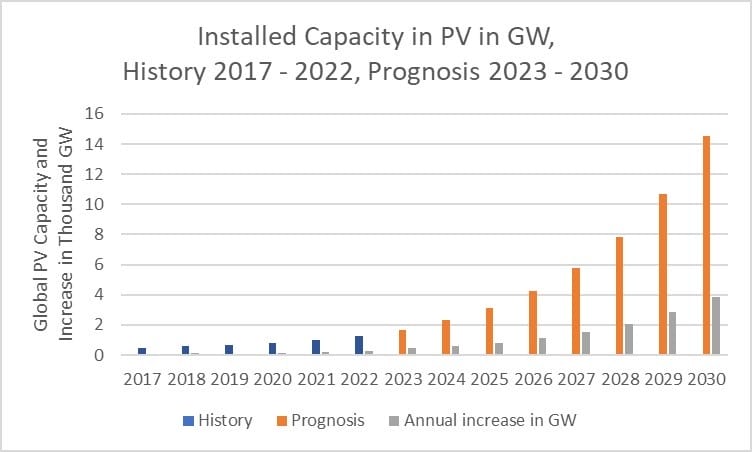
A collection of soothsayers throwing down on how many gigawatts of solar photovoltaics will be installed around the world in 2024 – which are expected to evolve over the year!
The Solar News Stream of Consciousness
This website is evolving. Specifically, the blog portion is changing. We will now have two blogs – one for standard articles, which we will publish more frequently – and a new blog page . This new blog’s purpose is to centralize, and control a bit more, the creation and curation of content by CommercialSolarGuy.
In recent years, we have seen many social media companies gain prominence. These companies have generated great wealth, upended the news and information systems, and have arguably create a broader global mind.
Concurrently, these tools have been used to manipulate. Cambridge Analytica made leaving Facebook very easy, many connections were lost though. Instagram was lost as I learned about self esteem issues in the youth and how the company manipulated them for traffic, and with that watching my family share images was lost. LinkedIn not caring about spam and fake profiles elbows me along. And most disappointingly, Musk seemingly cohabitating with dictators that are doing terrible things to our world, along with his erratic nature, now have me actively thinking, and taking action, on what are the best ways to invest limited knowledge giving/taking time.
With that, we have decided to bring the creation of our social media home – here, on this website in fact, to the Solar News Stream of Consciousness. We will curate, create, and distribute knowledge that we learn while probing the world related to solar electricity generation, and it’s close information siblings. The posts will be formatted to be deployed on whatever social media platform you choose to populate, and – eventually – we will develop tools to bring your reactions back to our site, and send our responses back to your home.
Concurrently, we will also continue to follow and interact with those who we appreciate on their own various platforms – but in a different manner than we do today. We need to find a way to take care of ourselves, while still visiting the public square. The greatest value of Twitter is who we could interact with, and those who had gathered to share. The wonder of LinkedIn is that we are are all trying to focus business and bring attention to taking care of our clients. The beauty of the Federated websites (Bluesky and Mastodon) is that they show the people want better. Maybe we need all have our own website, but wire them together in a way that we all interact with each other however we please.
We so greatly appreciate the tens of thousands of professionals and interested people who follow our various profiles. We seek to continue this work, for both your – and our – benefit.