

Building commercial solar power plants requires managing people, coordinating crews, and handling critical steps like solar project inspections. I sat down with our construction manager, Sena Oran, to discuss her day-to-day work and the many details that make solar project management successful.
What is solar project management?
According to Oran, the most important step is beginning with a thorough site visit alongside the master electrician. Together, they take photos, meet the crew and customers, and set expectations that carry through the entire construction process.
After onboarding the customer, Oran meets with the engineering team to review drawings, create a materials list, and procure equipment. At this stage, they also evaluate the site’s geotechnical conditions, another critical part of solar project management that ensures designs match real-world conditions.
Managing the solar installation process
If underground work is required, the team must determine whether gas, sewage, or electrical lines are present. Common tools include calling Dig Safe, contacting local utilities, or using ground-penetrating radar before digging.
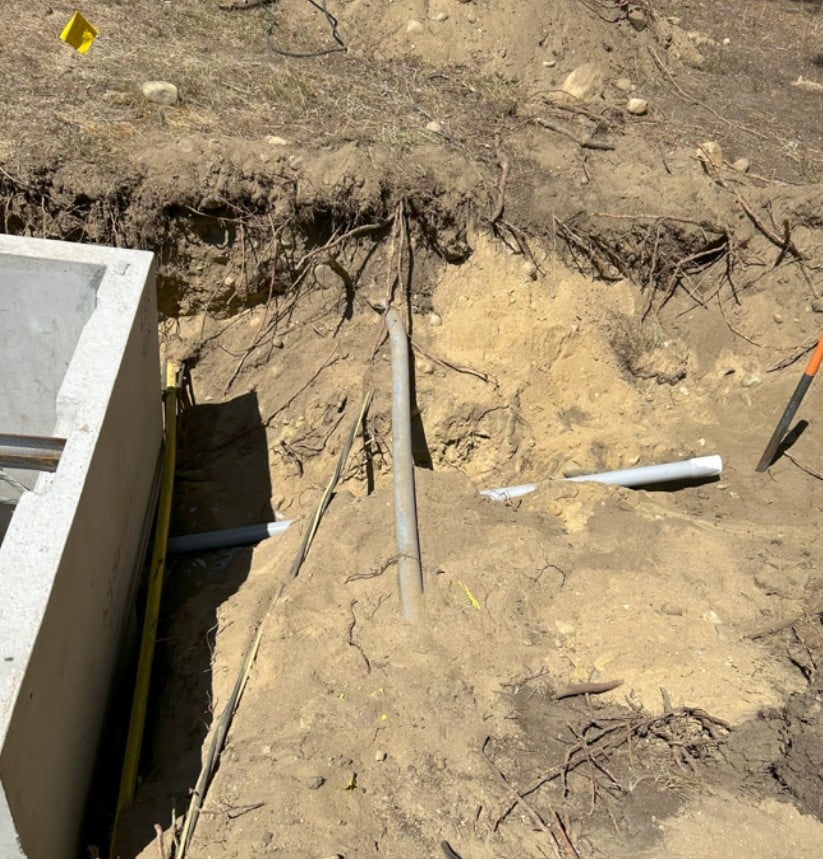
Recently at a New Hampshire site, crews uncovered underground gas piping. They immediately called the fire department. Inspectors determined it was an abandoned propane line, and the design was adjusted to route around it. These surprises are common in solar construction projects.
These kinds of steps and decisions occur throughout the installation process. One of the most important things a skilled project manager can do is maintain clear records of communication among the many teams involved. This ensures questions can be answered quickly and accurately. For example, if Sena learns from the procurement team that a heavy piece of equipment—such as a multi-ton transformer—is scheduled for delivery, that triggers coordination to ensure the proper receiving equipment, like a forklift with adequate capacity, will be on-site.
Similarly, in the case of trenching near gas lines, the team had to coordinate with the local fire department, obtain documentation after the inspection, and deliver that to the customer.
Risk management & communication on a solar project
Once our construction manager is given the green light—often after hearing about a project for over a year during development—they begin to reframe the project internally and build the execution plan.
At Commercial Solar Guy, that process starts with a spreadsheet estimating components, labor, machinery, time, and costs required to complete the project. This working document evolves into a procurement tracker, Gantt chart, and cost log as actual purchases and work begin.
Depending on the client and team structure, additional software tools come into play. Procore is commonly used across the construction industry to coordinate between companies. It allows users to log questions, upload photos, manage document approvals, and track hardware deliveries—all in one shared workspace.
We also use platforms like Google Drive and Dropbox to share documents and images between teams efficiently.
The punch list: finishing solar construction strong
When asked about the most difficult part of her job, Oran didn’t hesitate: the punch list. A punch list documents remaining fixes and adjustments before a solar project is officially complete.

For some customers, wires must be tucked away for aesthetics. Others prefer accessibility for operations and maintenance (O&M). No two lists are the same, but working with repeat customers helps—construction managers learn their preferences and can anticipate them earlier in the process. Keeping these punch list details organized is a major step in effective solar project management.
Solar project inspections and approvals
Utility inspections and transformer installation
Inspections vary by site and by utility, and they can quickly add layers of complexity. In one recent project, the utility required its own transformer installation. To meet their standards, our team built a pad with multiple layers—geotextile fabric, sand, carefully sized stone, reinforced concrete, rebar, and protective bollards. Each stage required sign-off, resulting in five separate inspections before the transformer was even installed.

Certificate of Completion and local approvals
On the electrical side, the local authority usually issues a Certificate of Completion (COC), confirming that the solar system meets code and can be energized. Building inspectors review the structural closeout, while utilities may add their own final checks for interconnection safety.
Moving toward COC is a longer process than just an inspector showing up. As noted above, the utility itself has multiple inspections before we can install a transformer. The town inspector, depending on the project size, will also have a succession of site visits to make.
These visits are separate from trench inspections, or other connections that the inspector would want to see before the project is completed.
Additional utility reviews
These inspections can feel repetitive, but they serve different purposes: quality control, safety assurance, and regulatory compliance. A well-prepared construction manager treats them as milestones rather than obstacles, scheduling work to keep projects moving between approvals.
After a project has – for instance – installed its transformer, and received its COC, the contractor will submit a collection of documents to gain Permission to Operate (PTO). This step involves collecting key documents, images, third party verifications, and more.
And while sometimes it feels like the power company is being overly picky, we live in a world highly dependent on the power grid – so while we lament the process sometimes, its a necessary effort to keep society stable really.
Commissioning and handoff to O&M
Once the system is live, the construction manager’s job isn’t over. Oran monitors each site using a Data Acquisition System (DAS) to track production and ensure systems operate properly.
If an inverter fails to start up, or if equipment was damaged during construction, Oran receives an alert and works with the electrical team to resolve the issue. Only after commissioning is complete does the project transition fully to the operations and maintenance team.
Why strong solar project management matters
Solar construction managers keep commercial projects moving despite challenges—whether it’s redesigning around underground utilities, managing punch lists, or coordinating multiple inspections. With clear communication, planning, and follow-through, effective solar project management ensures projects are completed on time and deliver reliable performance for years to come.
When construction slows, costs start to pile up—labor hours, equipment rentals, financing interest, insurance premiums, and more. One of the greatest values a capable project manager brings is keeping the schedule visible and actionable. Even something as simple as ensuring every crew knows what they’re doing the next day can make the difference between a smooth build and a stalled one. When teams arrive ready to stretch, coordinate, and execute, having a clear plan in hand makes that work possible.