
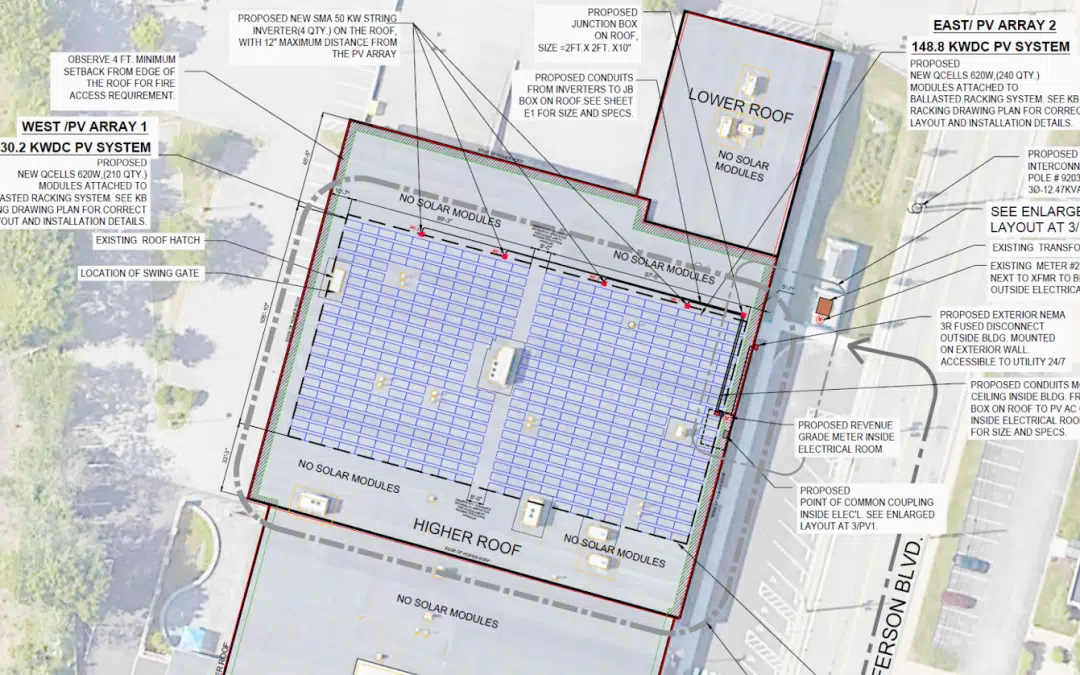
The 279-kW solar array we installed on the roof of the National Elevator Industry Educational Program training center in Warwick, Rhode Island is a great example of the second kind.
Bringing this project from start to finish wasn’t a straight line. Along the way, we had to make adjustments and changes to the original design in order to respect the structural integrity of the building, maintain the pristine condition of the brand new Carlisle roofing system and lightning arrester installation, and meet the needs of the client.
Despite the differences from the original vision, it is still an incredibly successful solar installation.
If you haven’t yet read the first article about this installation, find it here:
We’re immensely proud of the finished product — and all the work it took to get it done. Our team showed forethought, persistence, patience, flexibility, and most of all, a commitment to delivering excellent results. All of that hard work resulted in an incredible new asset that will deliver decades of financial returns to the NEIEP.
There’s a story like this behind every solar installation, and we think this one is a perfect example of why you should work with us.
How CommercialSolarGuy got the NEIEP project
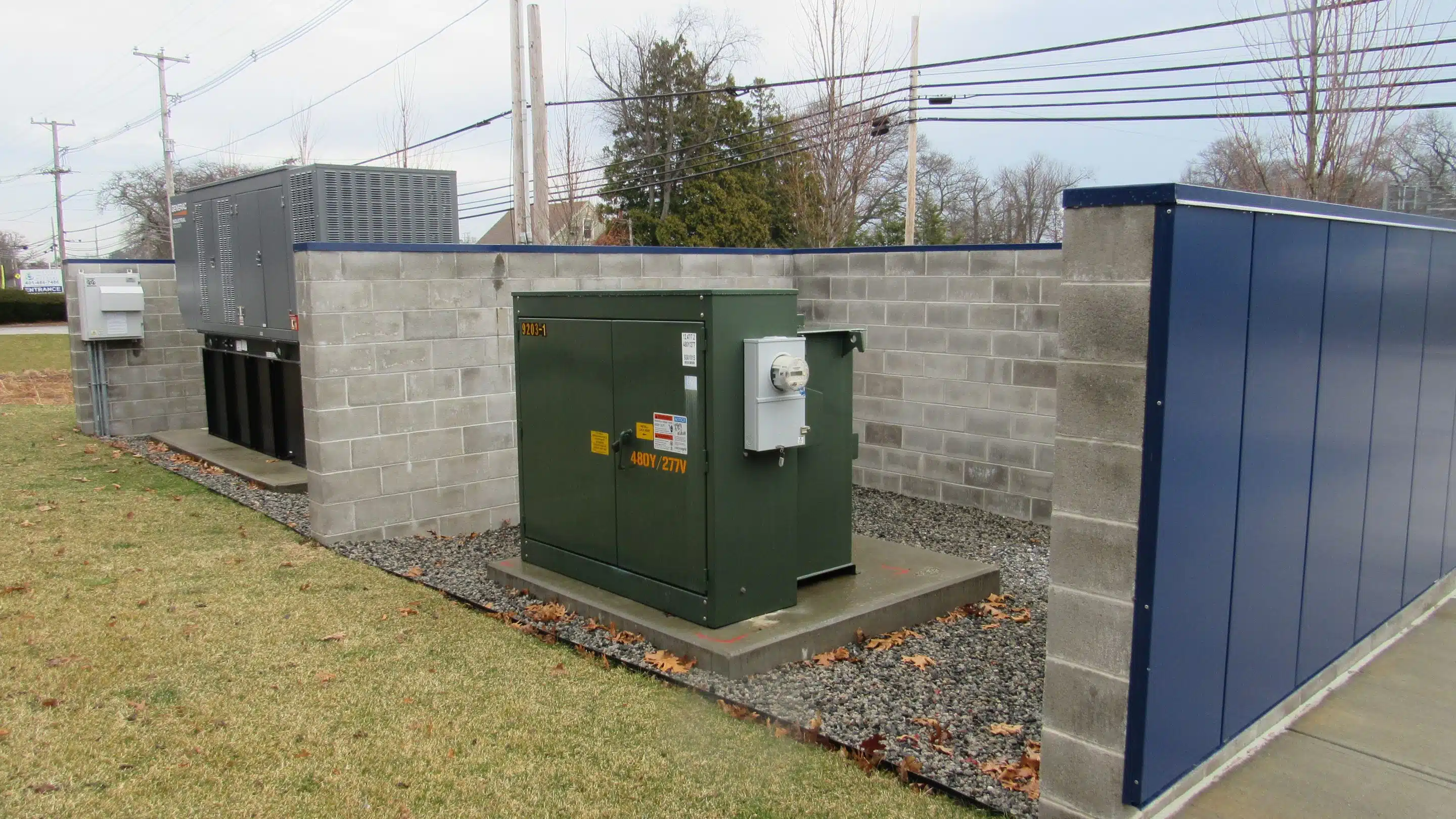
It all started in late 2023, when our Professional Engineer, Mark Eckert, used the Rhode Island hosting capacity map, to make a list of places where the grid could take on new solar installations. The site on the top of Mark’s list was the NEIEP Training Center in Warwick, Rhode Island.
Then our design engineer, Benjie Borra, produced a beautiful preliminary layout in HelioScope to maximize the roof of the NEIEP building with 995 kW of solar (pictured below). We created a sales proposal based on that layout, and our Business Operations Manager, Richelle Dominique, visited the building to deliver it in person.

The original proposed solar layout for the NEIEP training center, with 1,851 panels covering all major parts of the roof.
A chance meeting
Inside the NEIEP building, Richelle found an empty lobby, but heard voices coming from the end of a long hallway. As she neared the source of the voices, the doors to the conference room opened, and several of NEIEP staff members stepped out to take a break from the all-day meeting they’d been conducting.
Richelle approached two of the men in the crowd, introduced herself, and asked if they knew whom to speak to about a potential solar project for the building. The men turned out to be NEIEP’s Executive Director David Morgan and Assistant Executive Director John Caughey.
As Richelle discussed the sales proposal with the two executives, David turned to John and said “wasn’t I just talking with you about doing solar for the building?”
It was the perfect moment of serendipity, and the start of a great business relationship.
Building trust through expertise
After Richelle’s initial meeting with David Morgan and his team at the NEIEP, CommercialSolarGuy Sales Manager Craig Sargent began working with them to define what was possible.
Craig and our engineering team dedicated their time to making sure we understood the NEIEP’s needs. The most important thing to us was building a system that provided an excellent long-term value for the NEIEP and respected their mandate to be good stewards of the funds entrusted to them as a non-profit entity.
The first step was to show the financial modeling for the project, with energy production and savings estimates based on the preliminary design.

The experts of the CommercialSolarGuy team
Our goal is to maximize the ROI of solar in Rhode Island and help our clients take advantage of all the available incentives. These include:
- The federal solar tax credit
- Grants under the Rhode Island Renewable Energy Fund
- Bonus payments for energy under the RE Growth program
Considering all the available incentives, we estimated our initial design would result in over $240,000 in revenue for the NEIEP in year 1, and pay back its cost in just over 5 years.
Through these steps, the preliminary design was adjusted to account for the unique requirements of this project.
Refining the design before a final bid
Astute readers will note that the 995-kW system in the initial proposal was significantly larger than the completed 279-kW installation. Our initial conversations with the NEIEP were enough to convince their team to move forward with a more detailed estimate.
Our initial strategy had been to maximize the total roof space of the building, but while working through the sales process, it became clear that changes to the system design were based on many important factors.
Here’s a short run through the evolution of the system design for the NEIEP:
- We first learned that the facility’s annual energy usage was only enough to require 270 kW of solar for 100% offset.
- At that point, we proposed splitting the system into two portions: a 270-kW installation that would provide all the electricity needed by the building, and a 450-kW installation that the NEIEP could use to sell power directly to Rhode Island Energy under the RE Growth tariff.
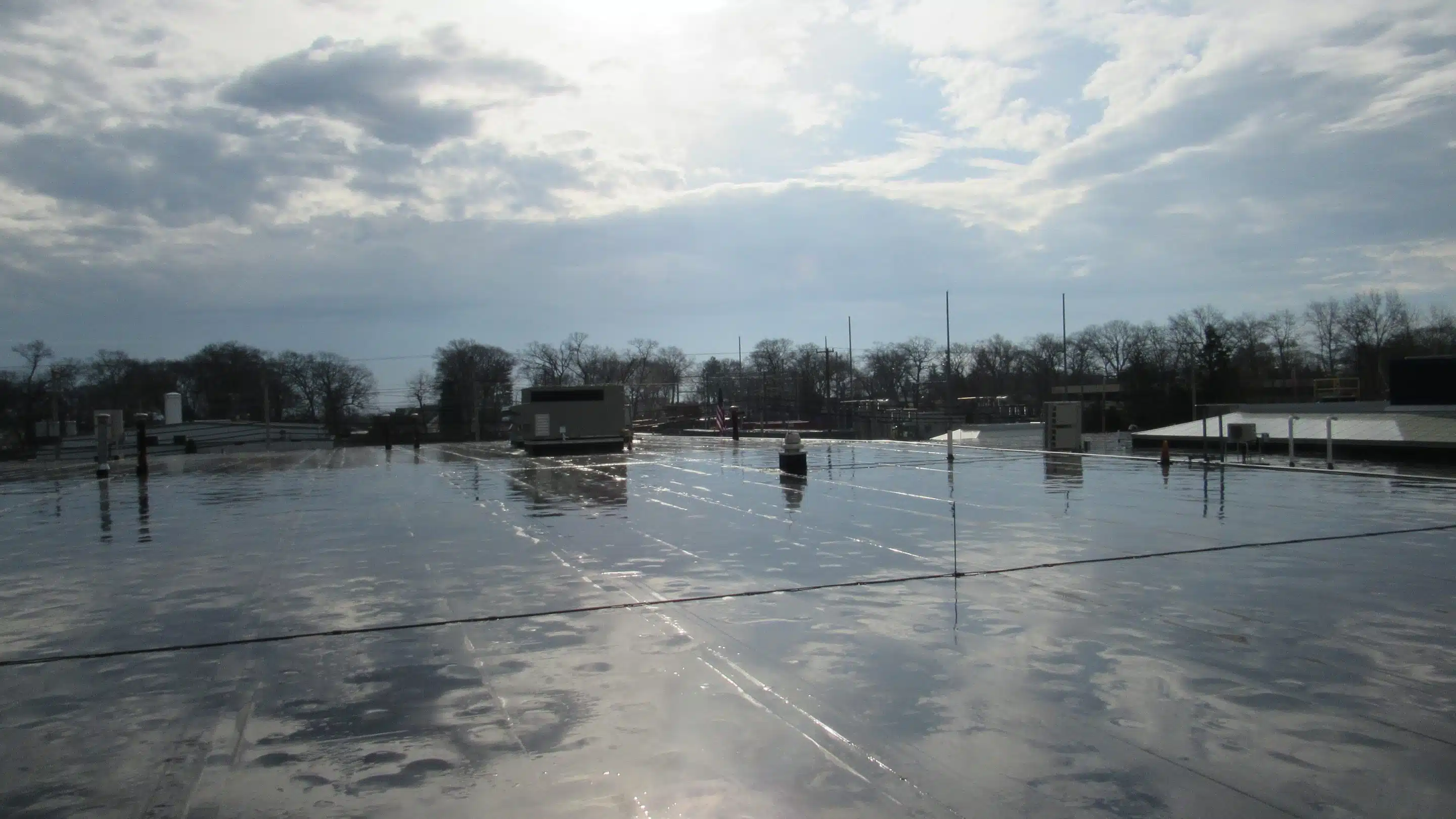
- Later in the process, a structural engineering study revealed that the building’s roof could hold no more than 3.5 pounds per square foot (PSF) of load, and some portions of the roof were not suitable for solar. The remaining space was limited to the highest portion of the roof.
We were left with a goal of installing what could fit on only one portion of the roof, but still meet the annual energy needs for the building. We solved this new challenge with a late-stage design tweak (which wouldn’t be the last one on this project), by switching to a new ultra-light form of ballasted racking called AeroGrid, from the KB Racking brand.

An illustration of the KB Racking AeroGrid system. Source: KB Racking
Winning the bid
The NEIEP did the right thing by getting competitive bids for the project. Because the organization is a non-profit, they need to be sure to be good stewards of the funds with which they are entrusted.
The board wanted to be certain the project would be eligible for direct-pay incentives under the federal solar investment tax credit, and they also wanted assurances that they’d get the Renewable Energy Fund Grant. We worked with them throughout the process, answering questions and providing the certainty they needed to move ahead.
When it came time for the final sales meeting, our team was separated on two different continents! The main team was in Rhode Island, while General Manager John Fitzgerald Weaver — the Commercial Solar Guy himself — was in Germany for the 2024 Intersolar conference. He attended the meeting remotely, propping his laptop on a German garbage can on a side street in Munich!
On September 25th, 2024, the NEIEP board approved funding for the project, and we began to prepare to make the transition from the theoretical into the practical.
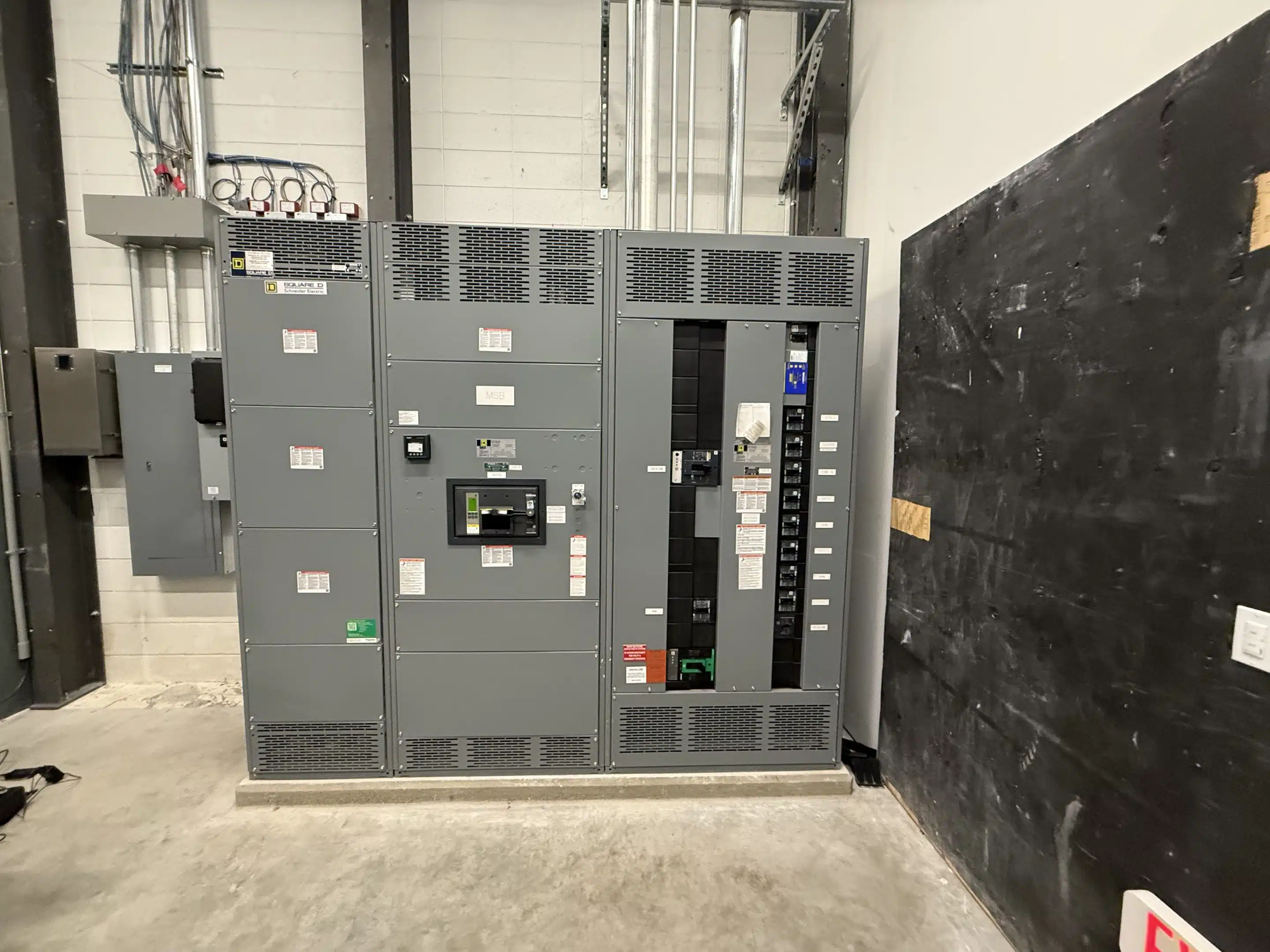
Images from the solar sales process
Up next: Development
The sales process for this project was a marathon, not a sprint, and we’re proud of all the work that went into winning the bid. But the transition from the sales process into building a solar installation is like finishing a marathon and starting a triathlon right after.
Thankfully you get to plan it all out ahead of time.
The development process is all about going from signed contract to the first day of construction. It’s where we apply for incentives, hire contractors, work on infrastructure upgrades, file for permits and interconnection, and and adjust the finer points of the design to make sure it’s 100% suited to the site.
We’ll cover all of the above in the next one. Until then, remember: the sun doesn’t send an invoice, but the utility company does. We’re happy to help you stop paying it and plan for a future in the sun.